A “Makeover” for “The Monument” Website

In addition to being given a new look, the website of THE MONUMENT has been upgraded with more and clearer content within its many pages.  In an old-fashioned way, perhaps, there’s a lot of text — which, it seems to me, this topic deserves.

The change has been guided by my colleague and friend Bill Boyle, whose SHAKESPEARE ADVENTURE page is going strong.  We fully admit that this activity is in no small degree motivated by anticipation of the release of ANONYMOUS, the new feature film by Roland Emmerich, due in late September this year.  With the release of the very first major motion picture to feature Edward de Vere Earl of Oxford as “Shakespeare,” the all-important [that’s right] topic of “authorship” will be brought to many, many people who have never been told that any such question about the Bard’s identity has ever existed.  Well, that’s a relatively big step; after all, students can’t go trying to solve a mystery if they don’t know it exists.

Check out the new website (WWW.SHAKESPEARESMONUMENT.COM) and tell us what you think.  Comments, suggestions, criticisms — all welcome.  Cheers from Hank

“Shakespeare’s Son and His Sonnets” – An Amazon Review

I’d like to share an Amazon customer review of Shakespeare’s Son and His Sonnets by my friend and colleague Peter Rush, as a way of publicly thanking him for the rave, which now follows:

In 2005 the author, Hank Whittemore, published his “monumental”, and I would say definitive, study of Shakespeare’s Sonnets, entitled The Monument.  Its 900+ pages is an extended tour de force, and represents, in my opinion, and the opinion of a growing number of others, scholars and “lay” persons alike, the heretofore missing “smoking gun” that not only explains, fully and totally, the entire cycle of 154 sonnets, down to every word in every line in every sonnet, but resolves, definitively, with no room for an alternate explanation, the “Shakespeare authorship” debate, in favor of Edward de Vere, the 17th Earl of Oxford.

The present volume is the author’s teaser, intended to reveal the core of his analysis and argument, in a very readable, relatively abbreviated format, that will by virtue of a more affordable price and much shorter format, reach a much broader and more general audience.

It is to be hoped that, teased by this volume, many will recognize the need to acquire The Monument itself in order to fully appreciate, at a much deeper, far more satisfying level, dozens and dozens of sonnets they have probably never read before, and which, had they read them, they would have found them incomprehensible, but which they will now find become transparent as to meaning, which will open up the ability to appreciate the astounding poetry, rich beyond compare.

I could attempt to provide some of the actual evidence for Whittemore’s thesis in this review, but I could only begin to scratch the surface, and I couldn’t do it as well as it is done in this volume. This volume can be read in one sitting, and does the job extremely well.  I do commend people to read my review of The Monument in Aug. 2005,  the first review that comes up, for some more information on Whittemore’s revolutionary discovery.

What I do want to say is that Whittemore has identified that not only a few sonnets, as some others have correctly determined, but every single sonnet, is about the 3rd Earl of Southampton, Queen Elizabeth, and/or Oxford himself, which has importance for one reason only — that Southampton was Oxford’s unacknowledged son by Elizabeth, thus of royal blood, a potential successor to Elizabeth, requiring only that she recognize him as her bastard
son for him to become king on her death. Don’t freak out, if this is the first time you’ve heard this thesis. Trust me, when you read this book, you will see hundreds of references in the sonnets that only make sense if this hypothesis is correct. Please don’t prejudge the argument without reading the evidence for yourself.

What I can confirm is that no other attempt to explain the entire sonnet cycle by any other researcher (and only a few have even attempted to analyze all 154 in detail and as a unified corpus), comes remotely close to explaining every sonnet, much less every word and every line in every sonnet. Absent Whittemore’s brilliant analysis, the sonnets at best remain an enigmatic exercise by an acknowledged genius that continues to elude intelligible explication. Anyone with any interest in Shakespeare, the sonnets, and/or the authorship debate, must read this book.

What you will find here is a wealth of different types of evidence that matches the sonnets, one by one, to historical events in Southampton’s life through his release from imprisonment in 1603. The first 17 are entreaties to marry (anyone) in order to procreate, in order to carry on the royal line. Sonnets 27-106 start on the day Southampton was arrested for teason on Feb. 8, 1601, and end the day before he was released. 107-126 cover the days to the burial of Queen Elizabeth. 127-152 are a reprise of the imprisonment period, more briefly, focusing more on Oxford’s anger at Queen Elizabeth, the “dark lady.”

Whittemore convincingly shows who the “rival poet” is, and by establishing that Southampton was his own son, obviously solves the riddle of how/why these poems could be putative love poems to–another man!

What distinguishes The Monument from this volume is that, in addition to providing even more detail along the lines of what this book contains, The Monument provides 14-line translations of every sonnet, rendering the underlying meaning clear, and then providing, in 1-3 pages each, detailed analysis of every line, and many words and phrases, for every sonnet, and showing how the same words or concepts also have appeared in one or more plays.  One needs to read The Monument to really appreciate every sonnet. But the present volume is a wonderful introduction to the thesis, and permits understanding many of the more crucial sonnets.

The Shakespeare authorship debate is in as full a swing as it has ever been. Finally, a number of leading Stratfordians have realized that ignoring the Oxfordian argument wasn’t working for them, and they have decided they need to fight back with books of their own on the authorship debate, websites, etc.

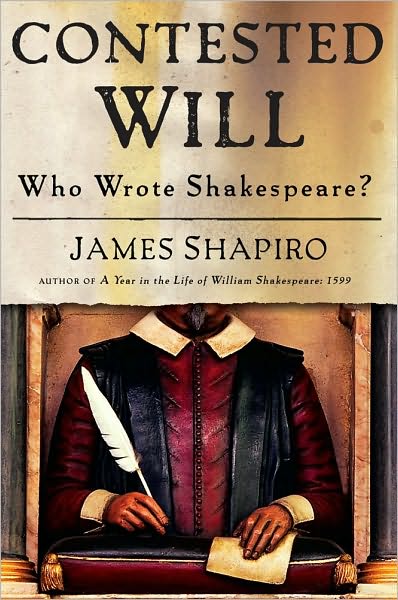
James Shapiro signs my copy of "Contested Will" for me after giving a talk in New York City.

James Shapiro’s “Contested Will: Who Wrote Shakespeare” is just the latest book I believe to be entered in the lists (a wretched, pathetic attempt, in my opinion), and there are a number of extensive websites. In several of these, the Stratfordian side has finally attempted (I think futilely) to actually mention the arguments from the Oxfordian side, and attempt to refute them.  I mention this because, despite being available for the past five years, I have been unable to track down a single attempt by any Stratfordian to tackle Whittemore’s thesis.

I believe this fact (unless I’ve missed some analysis somewhere) is extremely telling.  Given the slowly gathering recognition by more and more people that Whittemore has found the key to both the sonnets and to the authorship issue, it seems pretty certain that had the Stratfordian side any serious argument with which to debunk Whittemore’s thesis (other than prima facie “the thesis that Southampton is QE’s son is impossible”), we would have seen it by now. Their silence speaks volumes in favor of the power of his thesis and
likelihood that Whittemore has, indeed, solved this mystery. I can only imagine that they pray every night that most people will never be able to “get over” their aversion to believing that Southampton could be QE’s bastard son by Oxford, and hence never have to confront Whittemore’s thesis on the evidence itself. If so, I believe they will find themselves sadly mistaken.

In the interests of full disclosure, I want to make known that I have become a personal friend of the author, having read an early draft of his thesis in 2000 on a listserve, when I first contacted him, and have followed his progress from tantalizing hypothesis to confirmed theory ever since. I don’t believe this taints my review. I was intrigued by his early hypothesis, and totally convinced by The Monument, his completed thesis. The present volume is wholly derivative from that 2005 book.

I also want to note a criticism of the way the book was put together, which doesn’t negatively impact the thesis, but does cry out for improvement in a second edition.  The volume reads like a compilation of three or four essays that might have been written separately and then just published together (but I don’t believet his was the case).  Transitions between some of these sections are lacking, and the effect leads to occasional repetition of points already made in an earlier section, and some jumping around of the subject matter.

Thanks to Peter Rush — and Cheers from Hank

“The Second Burden of a Former Child” – Sonnet 59 of The Living Record of Henry Earl of Southampton

THE PRISON YEARS
DAY THIRTY-THREE IN THE TOWER

EXECUTION DRAWS NEARER

Sonnet 59
Labouring for Invention
The Second Burden of a Former Child

12 March 1601

While waiting for Elizabeth [actually Robert Cecil] to make her decision about the fate of their royal son [or waiting for him to agree to give up his claim to the throne], Oxford continues to record the days of Southampton’s life in this diary.  He refers to his “invention” of the Sonnets – an “invention” he introduced when publicly dedicating Venus and Adonis to him as “the first heir of my invention” or his invented name “William Shakespeare.”  Now that same “invention” has been extended to his method of communicating to posterity through the poetry of the Sonnets; and he is “laboring for invention” by giving his son rebirth in this womb or “living record” of the private verses.  His diary is itself the “second burthen” (new burden of childbirth or re-creation) of a “former child,” i.e., of a son who was once his but who was taken from him by the Queen and never acknowledged as the rightful heir to the throne.

1- If there be nothing new, but that which is
2- Hath been before, how are our brains beguiled,
3- Which, lab’ring for invention, bear amiss
4- The second burthen of a former child!

5- Oh that record could with a backward look,
6- Even of five hundred courses of the Sunne,
7 – Show me your image in some antique book,
8 – Since mind at first in character was done,

9 – That I might see what the old world could say
10 – To this composed wonder of your frame;
11 – Whether we are mended, or where better they
12 – Or whether revolution be the same.

13 – Oh sure I am the wits of former days
14 – To subjects worse have given admiring praise.

1 IF THERE BEEN NOTHING NEW BUT THAT WHICH IS
Proverbial and biblical; “if there is nothing new under the sun,” echoing the royal sun; i.e., there is nothing new under the royal son; “For as the Sun is daily new and old,/ So is my love still telling what is told” – Sonnet 76, lines 13-14

2 HATH BEEN BEFORE, HOW ARE OUR BRAINS BEGUILED,
BEGUILED = cheated; “Thou dost beguile the world” – Sonnet 3, line 4

3 WHICH, LABORING FOR INVENTION, BEAR AMISS
LABORING FOR INVENTION
= The image of Oxford’s brain giving birth or rebirth to his son in these sonnets, using his “invention” explained in Sonnet 76 and demonstrated in Sonnet 105.

“Only, if your Honour seem but pleased, I account myself highly praised; and vow to take advantage of all idle hours, till I have honoured you with some graver labour.  But if the first heir of my invention prove deformed, I shall be sorry it had so noble a godfather, and never after ear so barren a land, for fear it shall yield me still so bad a harvest” – Dedication of Venus and Adonis to Southampton, 1593

“My very good Lord.  I have labored so much as I could possibly to advance Her Majesty’s customs of tin” – Oxford to Burghley, April 9, 1595

BEAR = give birth to; bear the burden of; BEAR AMISS = bear a son consigned by the Queen to the status of a royal bastard; “suggests ‘miscarry’” – Booth; “Myself corrupting salving thy amiss” – Sonnet 35, line 7, referring to his son’s role in the Rebellion

4 THE SECOND BURTHEN OF A FORMER CHILD!
BURTHEN
= burden; SECOND BURTHEN OF A FORMER CHILD = the second birth of you, and responsibility for you, in this secret diary; (“give birth a second time to a child that lived before” – Booth, citing the “primary” sense); Oxford is using the Sonnets in order to give “rebirth” to his son and to grow him in the “womb” of his diary written according to the dwindling time of the life of his mother the Queen; he is replacing Elizabeth’s womb with this one; “My first burthen, coming before his time, must needs be a blind whelp, the second brought forth after his time must needs be a monster, the one I sent to a noble man to nurse, who with great love brought him up, for a year” – John Lyly, 1580, dedicating Euphues his England to Oxford

FORMER CHILD = “But out alack, he was but one hour mine,/ The region cloud hath masked him from me now” – Sonnet 33, lines 11-12; to Southampton, referring to these private verses: “Commit to these waste blanks, and thou shalt find/ Those children nursed, delivered from thy brain” – Sonnet 77, lines 10-11

5 OH THAT RECORD COULD WITH A BACKWARD LOOK,
RECORD
= the true record of your life in the Sonnets (oh, that it could look all the way back in time); “The living record of your memory” – Sonnet 55, line 8, referring to the record of his son’s life in these verses; “For thy records, and what we see, doth lie” – Sonnet 123, line 11, referring to the records of Time, i.e., historical records, that fail to tell the truth

6 EVEN OF FIVE HUNDRED COURSES OF THE SUNNE,
FIVE HUNDRED COURSES OF THE SUN
= referring to the five hundred years of the Oxford earldom, when his official blood lineage began in England; the royal past of England from 1066; THE SUNNE = linking his royal son to the blood lineage of past kings; “Even so my Sunne one early morn did shine” – Sonnet 33, line 9; “Making a couplement of proud compare/ With Sunne and Moone” – Sonnet 21, lines 5-6, i.e., Southampton and Elizabeth; “And scarcely greet me with that sunne, thine eye” – Sonnet 49, line 6; “Clouds and eclipses stain both Moone and Sunne” – Sonnet 35, line 3, i.e., both mother and son; “And crooked eclipses ‘gainst his glory fight” – Sonnet 60, line 7; “The mortal Moone hath her eclipse endured” – Sonnet 107, line 5; “My Mistress’ eyes are nothing like the Sunne” – Sonnet 130, line 1; “And truly not the morning Sun of Heaven/ Better becomes the gray cheeks of the East” – Sonnet 132, line 5

7 SHOW ME YOUR IMAGE IN SOME ANTIQUE BOOK,
Giving evidence of you in some old account or written account of the past; YOUR IMAGE = your royal image; “The image of the King … your most royal image” – 2 Henry IV, 5.3.79, 89

8 SINCE MIND AT FIRST IN CHARACTER WAS DONE:
MIND = the mind of humankind; IN CHARACTER = in the form of written words on the page; “What’s in the brain that Ink may character,/ Which hath not figur’d to thee my true spirit?” – Sonnet 108, lines 1-2, to Southampton; DONE = expressed, written down

9 THAT I MIGHT SEE WHAT THE OLD WORLD COULD SAY
THE OLD WORLD
= the realm of old England, in history

10 TO THIS COMPOSED WONDER OF YOUR FRAME:
To these sonnets, in which I compose the “wonder” or royal blood of you; “His head by nature framed to wear a crown” – 3 Henry VI, 4.6.72; WONDER = miracle; “won” playing on “one” for Southampton, as in the “wondrous excellence” and “wondrous scope” of Sonnet 105, marking Elizabeth’s death, followed by their amazement and marveling at the fact of Southampton’s forthcoming release amid the accession of James: “For we which now behold these present days,/ Have eyes to wonder, but lack tongues to praise” – Sonnet 106, lines 13-14

11 WHETHER WE ARE MENDED, OR WHERE BETTER THEY,
Whether we have done you more justice and where they would have written a better account of your life; WE = the royal “we” used in the opening of the diary: “From fairest creatures we desire increase” – Sonnet 1, line 1

12 OR WHETHER REVOLUTION BE THE SAME.
REVOLUTION
= the cycle of the sun and planets; echoing the Rebellion or revolt; “For as the Sun is daily new and old,/ So is my love still telling what is told” – Sonnet 76, lines 13-14; THE SAME = without change; echoing Elizabeth’s motto Semper Eadem or Ever the Same, inserted as “Why write I still all one, ever the same” of Sonnet 76, line 5

13 OH SURE I AM THE WITS OF FORMER DAYS
OH = O = Oxford; I AM = “I am that I am” – Sonnet 121, line 9; THE WITS = the wise writers or contemporary historians (of the past); ironically in the 1580s Oxford was leader of a group of writers known later as the University Wits, who have been regarded as the immediate “forerunners” or “predecessors” of Shakespeare

14 TO SUBJECTS WORSE HAVE GIVEN ADMIRING PRAISE.
SUBJECTS
= topics; servants of the monarch; TO SUBJECTS WORSE = to lesser subjects of a monarch; i.e., Southampton is a subject of the Queen; in the eyes of the law he is a traitor, but other “subjects” praised by writers have been much worse

(It is interesting that this particular sonnet is placed in correspondence with the 33rd day of Southampton’s imprisonment, given that it reflects the age of Christ at His death on the Cross.  Sonnet 59 alludes to Southampton’s birth in 1574  along with Sonnet 33: “Even so my Sunne one early morn did shine…”)

“The Living Record” – The Execution of Southampton Draws Near – Sonnet 58 – “The Imprisoned Absence of Your Liberty” – Chapter Fifty-Three

DAY THIRTY-TWO IN THE TOWER
EXECUTION OF SOUTHAMPTON DRAWS NEAR

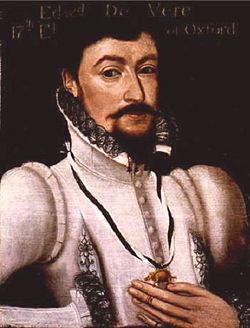
Edward de Vere, 17th Earl of Oxford (1550-1604)Sonnet 58
Imprisoned Absence
Your Self to Pardon
11 March 1601

Speaking as a “vassal” or subject of a king, Edward de Vere Earl of Oxford tells Southampton that the bargain being made for his life includes gaining a royal pardon for him.  He introduces the younger earl’s “charter” or royal privilege as so “strong” that he will be able to gain this “pardon” – the same “charter” of Sonnet 87, line 3, that will give him “releasing” from prison by King James.  As a practical matter, Southampton holds his fate in his own hands, since he must decide to give up any claim to the throne.  Has he agreed to this ransom for his life or is he resisting it?  Meanwhile the Queen is still (officially) in charge and Oxford continues to suffer the “hell” of “waiting” for her either to execute their son or spare him.

Sonnet 58

1- That God forbid, that made me first your slave,
2- I should in thought control your times of pleasure,
3- Or at your hand th’account of hours to crave,
4- Being your vassal bound to stay your leisure.
5- Oh let me suffer (being at your beck)
6- Th’imprisoned absence of your liberty,
7- And patience tame to sufferance bide each check,
8- Without accusing you of injury.
9- Be where you list, your charter is so strong,
10- That you yourself may privilege your time
11- To what you will; to you it doth belong
12- Yourself to pardon of self-doing crime.
13- I am to wait, though waiting so be hell,
14- Not blame your pleasure, be it ill or well.

Henry Wriothesley, 3rd Earl of Southampton (1573-1624) - Actual Birth Date 1574 - Unacknowledged Son of Oxford and Queen Elizabeth,

1 THAT GOD FORBID, THAT MADE ME FIRST YOUR SLAVE,
That God, who made me your “slave” or servant from the beginning, forbids or forbade; (“But God forbid that I should rejoice, but in the cross of our Lord” – Galatians, 6:14); an image of Oxford serving his son as one who serves a god, i.e., as “a God in love” of Sonnet 110, line 12 or as “the little Love-God” of Sonnet 154, line 1; FIRST = a term referring to a general period of time in the past, as in, “Since first I saw you fresh, which yet are green” – Sonnet 104, line 8; SLAVE = servant; “a person who is absolutely subject to the will of another” – Schmidt; carried over from the previous verse: “Being your slave, what should I do but tend/ Upon the hours and times of your desire?” – Sonnet 57, lines 1-2

2 I SHOULD IN THOUGHT CONTROL YOUR TIMES OF PLEASURE,
IN THOUGHT = have it in my mind, i.e., that I should think I can determine how you spend your time, or when I may visit according to your royal pleasure; CONTROL = have power over; i.e., God forbid I should have power over you, my prince; Southampton is a prince or king with all “in his controlling” in Sonnet 20, line 7; “Can yet the lease of my true love control” – Sonnet 107, line 3; “A true soul/ When most impeached stands least in thy control” – Sonnet 125, line 14, admitting that Southampton has lost all claim to be king or have control, just before Oxford ends his diary; PLEASURE = your Majesty’s pleasure or royal will; YOUR TIMES OF PLEASURE = the times when you command me (or allow me) to visit you in the Tower

3 OR AT YOUR HAND TH’ACCOUNT OF HOURS TO CRAVE,
Or to ask you to give me an accounting, by your royal hand, of how you spend your hours; AT YOUR HAND = at your royal command; “Yet shall you have all kindness at my hand” – King Lewis in Henry VI, 3.3.149; “And if thy poor devoted servant may but beg one favor at thy gracious hand” – Richard III, 1.2.210-211; as when Oxford writes of the Queen having refused to acknowledge their son as her natural heir by recording that the boy “Was sleepling by a Virgin hand disarmed” – Sonnet 154, line 8; “A dearer merit … have I deserved at Your Highness’ hands” – Richard II, 1.3.156-158

Queen Elizabeth I of England (1533-1603)

TH’ACCOUNT OF HOURS = record of time with you; (also possibly a play on “ours,” referring to these sonnets as this “account of ours”); the “account” is also the “sum” or “store” or “treasure” or “Audit” of Southampton’s royal blood; CRAVE = beg, as to a king or superior; “Then I crave pardon of Your Majesty” – 3 Henry VI, 4.6.6-8; “Till time and vantage crave my company” – Northumberland in 2 Henry IV, 2.3.68

4 BEING YOUR VASSAL BOUND TO STAY YOUR LEISURE.
YOUR VASSAL = your servant; “That lift your vassal hands against my head and threat the glory of my precious crown” – Richard II, 3.3.89-90; “Your Majesty’s humblest vassal, Essex” – the Earl of Essex to Queen Elizabeth, 1600; “Lord of my love, to whom in vassalage” – Oxford to Southampton, Sonnet 26, line 1; BOUND = tied to; obliged; imprisoned; “My duty … is bound to your Lordship” – dedication of Lucrece to Southampton; STAY = wait upon; restrict; STAY YOUR LEISURE = wait until you have time to listen; wait upon your royal time; the time of which you may freely dispose; “I will attend upon your lordship’s leisure” – 1 Henry VI, 5.1.55; “the adverse winds, whose leisure I have stay’d” – King John, 2.1.57-58; “We will stay your leisure” – to Hotspur in 1 Henry IV, 1.3.254

5 OH LET ME SUFFER (BEING AT YOUR BECK)
OH = O = Oxford; ME = Oxford; LET ME SUFFER = allow me to suffer by making this sacrifice on your behalf, to save your life and gain your freedom with honor; “To weigh how once I suffered in your crime” – Sonnet 121, line 8; BEING AT YOUR BECK = I, being your servant and at your command; “Egypt, thou knewst too well my heart was to thy rudder tied by th’strings and thou shouldst tow me after.  O’er my spirit thy full supremacy thou knewst, and that thy beck might from the bidding of the gods command me” – Antony and Cleopatra, 3.11.56-61

Tower of London, where Southampton awaits execution

6TH’IMPRISONED ABSENCE OF YOUR LIBERTY,
IMPRISONED = Southampton, imprisoned; ABSENCE OF YOUR LIBERTY = The “absence” of Southampton’s liberty is imprisoned within Oxford’s mind and heart; (it “also carries suggestions of ‘lack of the liberty of you,’ ‘lack of the privilege of unrestricted access to you” – Booth); “I cannot conceive in so short a time and in so small an absence how so great a change is happened to you” – Oxford to Robert Cecil, December 4, 1601; LIBERTY = Southampton’s freedom and even his life itself, the absence of which would mean his death (by execution); “Those pretty wrongs that liberty commits” – Sonnet 41, line 1; “Humbly complaining to her deity got my Lord Chamberlain his liberty” – Richard III, 1.1.76-77

“I am sorry to see you ta’an from liberty, to look on the business present.  ‘Tis His Highness’ pleasure you shall to th’Tower” – Henry VIII, 1.2.204-207

His liberty is full of threats to all.
Hamlet, 4.1.14

7 AND PATIENCE TAME TO SUFF’RANCE BIDE EACH CHECK,
PATIENCE TAME = make my patience tame; cure my impatience; be tamed by patience; SUFFERANCE = subjugation; also, related to suffering or misery; BIDE = follow; CHECK = restriction or hindrance (from being able to see you)

8 WITHOUT ACCUSING YOU OF INJURY.
ACCUSING = recalling the legal accusation of treason against Southampton; “Since that the truest issue of thy throne by his own interdiction stands accused” – Macbeth, 4.3.106-107; “Accuse me thus” – Sonnet 117, line 1, Oxford speaking after Southampton has been released and he, Oxford, has accepted all blame; INJURY = “injustice, wrong … offence … crime … anything contrary to a benefit … the wrong suffered by one” – Schmidt; “To bear love’s wrong than hate’s known injury” – Sonnet 40, line 12

9 BE WHERE YOU LIST, YOUR CHARTER IS SO STRONG
BE WHERE YOU LIST = wherever you want to be; wherever you are or happen to be; YOUR CHARTER = your royal privilege; “What he sets before us … is not the powers of a peer, but those peculiar to a king: power to grant charters of privilege and letters patent, power to pardon crimes – in short, the exclusively royal prerogative” – Leslie Hotson, referring to the poet addressing a king; “Charter – privilege, acknowledged right – a standard, nearly atrophied, metaphor from the written document by which a privilege, right, or pardon was legally granted” – Booth; “The charter of thy worth gives thee releasing” – Sonnet 87, line 3, related to the same kingly rights that will spare Southampton from execution and finally give him “releasing” from the Tower; SO STRONG = so royal; accompanied by such royal power; “You break no privilege nor charter there” – Richard III, 2.4.54); CHARTER = “A written document delivered by the sovereign or legislature; granting privileges to, or recognizing rights of; granting pardon, to receive a pardon” – OED, citing “Maister John Hume had his charter and was pardoned by the King” (1480); and “a charter of pardon” (Francis Bacon, 1626); (therefore Oxford is saying that James of Scotland, once he ascends as King of England, will grant Southampton a pardon; which, in fact, he will do); “Is not his heir a well-deserving son?  Take Hereford’s rights away, and take from Time his charters and his customary rights” – Richard II, 2.1.194-196

10 THAT YOU YOUR SELF MY PRIVILEGE YOUR TIME
YOU YOUR SELF = an emphasis on his royal identity; “This is I, Hamlet the Dane!” – Hamlet, 5.2.255-256; “But he that writes of you, if he can tell that you are you” – Sonnet 84, lines 7-8; PRIVILEGE YOUR TIME = related to the charter (or charter of privilege) of line 9; i.e., you are a king, so you may command yourself; “Such neighbor nearness to our sacred blood should nothing privilege him” – Richard II, 1.1.119-120

11 TO WHAT YOU WILL; TO YOU IT DOTH BELONG
TO WHAT YOU WILL = according to what your Majesty desires, to what you command; to do the bidding of your royal will; TO YOU IT DOTH BELONG = the royal power belongs to you; BELONG = referring to what belongs to a king; “Disdaining duty that to us belongs” – Queen to King in 2 Henry VI, 3.1.17; “with all appertinents belonging to his honour” – Henry V, 2.2.87-88; “Doth not thy embassage belong to me” – the Queen in Richard II, 3.4.93

12 YOUR SELF TO PARDON OF SELF-DOING CRIME.
YOUR SELF TO PARDON = you, being a king, may pardon your royal self; (if and when Southampton’s life is spared, he will need a royal pardon or else he will remain at the monarch’s mercy; Oxford is working to gain promise of such a pardon from James, if it is arranged that he will succeed Elizabeth; CRIME = the treason of which you were convicted; “To weigh how once I suffered in your crime” – Sonnet 120, line 8

PARDON = “Say ‘pardon’, king … No word like ‘pardon’ for kings’ mouths so meet” – Richard II, 5.3.116, 118; “letters of the kings’ grace and pardon” – Henry VIII, 1.2.104; “your Grace’s pardon” – Richard II, 1.1.141); after releasing Southampton on April 10, 1603, King James will issue him a royal pardon, based on prior negotiations involving Oxford and Robert Cecil, by which Southampton agrees to give up any royal claim; at this point in time, of course, the condemned earl still hopes his mother the Queen might grant it to him: “O let her never suffer to be spilled the blood of him that desires to live but to do her service, nor lose the glory she shall gain in the world by pardoning one whose heart is without spot, though his cursed destiny hath made his acts to be condemned” – Southampton to the Council, after the trial (Stopes, 225); “A gracious king that pardons all offences” – Henry VIII, 2.2.66; “May one be pardoned and retain th’offence?” – Hamlet, 3.3.56; “You straight are on your knees for ‘Pardon, pardon!’ And I, unjustly too, must grant it to you” – Richard III, 2.2.125-126; “Subjects may challenge nothing of their sovereigns; but, if an humble prayer may prevail, then I crave pardon of Your Majesty” – 3 Henry VI, 4.6.6-8

Pardon me, God, I knew not what I did:
And pardon, father, for I knew not thee.
My tears shall wipe away these bloody marks
3 Henry VI, 2.5.69-71

“Thus in haste I crave Your Majesty’s pardon…”
– Oxford to Elizabeth, June 1599

13 I AM TO WAIT, THOUGH WAITING BE SO HELL
I AM = “I am that I am” – Sonnet 121, line 9; (William or Will-I-Am or I-Am-Will); WAIT = wait upon, as a servant waits upon the presence of his king; “And’t please your grace, the two great cardinals wait in the presence” – Henry VIII, 3.1.16-17; Oxford must wait for the chance to visit him in the Tower; WAITING BE SO HELL = also the agonizing wait for the Queen to decide whether Southampton will live or die; “y’have passed a hell of Time,/ And I, a tyrant, have no leisure taken/ To weigh how once I suffered in your crime” – Sonnet 121, lines 6-8; WAITING = “your waiting vassals” – Richard III, 2.1.122; “waiting in the Court” – 1 Henry IV, 1.2.67

14 NOT BLAME YOUR PLEASURE BE IT ILL OR WELL.
NOT BLAME YOUR PLEASURE = not blame your royal pleasure or will; “the pleasure of the fleeting year” – Sonnet 97, line 2, referring to the royal pleasure or will of Elizabeth, who has kept Southampton in the Tower at her pleasure; “But since she (nature, the Queen) pricked thee out for women’s (her own) pleasure” – Sonnet 20, line 13, referring to Elizabeth’s royal will; “Now the cause falling out to be good, and by course of law Her Majesty’s, it is justice that Her Majesty may bestow the same at her pleasure” – Oxford to Robert Cecil, December 4, 1601; BLAME = to blame for a crime or fault; to censure or find fault with; “Or will you blame and lay the fault on me?” – 1 Henry VI, 2.1.57; echoing the blame put upon Essex and Southampton at the trial; “I cannot blame thee … But yet be blamed” – Sonnet 40, lines 7-8

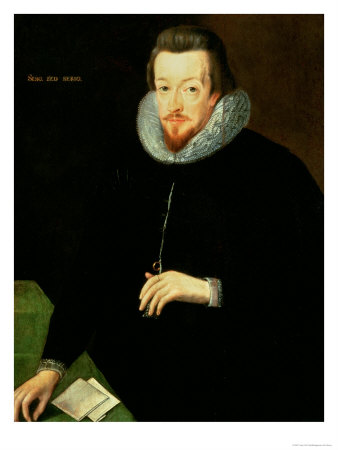
But who is this man???

Is he writing a sonnet? Thinking of a topic? Running out of ideas?

Contesting “Contested Will” – Part One

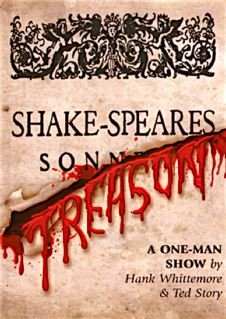
James Shapiro reaches the climax of his new book Contested Will in the epilogue, where – lo! – he recounts attending my performance of Shake-speare’s Treason (based on The Monument) in November of 2008 at the Globe playhouse in London.

His point, by page 267, is that it’s simply wrong to try to learn anything of substance about the man who was William Shakespeare, either from the documents about his life in Stratford and London or from his poems, plays and sonnets.  All is speculation, virtually all of it off the mark.

The first and foremost culprits are not those who dare to doubt that Will of Stratford was “Shakespeare,” but, rather, traditional Stratfordians, who have attempted to fashion flesh-and-blood portraits of the Bard by linking aspects of his recorded life to elements of his work and vice versa.

This practice has resulted in puffed-up fictions posing as biographies; these scholars should stop doing it, not only because they keep serving up baloney but also because they encourage anti-Stratfordians to keep doing the same thing for their own candidates, such as Edward de Vere, 17th Earl of Oxford.

And since the Oxfordians have so much more biographical evidence from which to pick and choose, they will keep on winning.  Even now, with the coming of Roland Emmerich’s feature film Anonymous about Oxford as Shakespeare (with Vanessa Redgrave as Queen Elizabeth), due out in 2011, the tide of public acceptance may even turn in their favor!

Queen Elizabeth I and Vanessa Redgrave

Shapiro’s solution is extraordinary and courageous and perhaps, in the long run, even foolish:  Let us have no more biographies of Shakespeare!  No more attempts to look in the plays and poems and sonnets to find any reflections of his real life!   Let us stop thinking entirely of Shakespeare the man, before it’s too late!

Such is the problem when you start with the wrong man in the first place!

He criticizes Stephen Greenblatt of Harvard for giving his “seal of approval” for the autobiographical approach with his bestselling Will in the World. Others have erred this way as well, he goes on, admitting that even “I flinch when I think of my own trespasses in classrooms and in print, despite my best efforts to steer clear of biographical speculation.”

Shapiro writes:

“The more that Shakespeare scholars encourage autobiographical readings of the plays and poems, the more they legitimate assumptions that underlie the claims of all those who dismiss the idea that Shakespeare wrote the plays.  And every step scholars have taken toward embracing such readings has encouraged their adversaries to make even more speculative claims.  The recent publication of Hank Whittemore’s Oxfordian reading of the Sonnets, The Monument, offers a glimpse of where things may be heading…

“In November 2008, I joined ninety or so people gathered at London’s Globe Theatre to hear Whittemore share his work.  It turned out to be an elegant revival of the Prince Tudor theory….”

Here he offers a concise (and accurate) summary of the story of the Sonnets as set forth in The Monument and dramatized in Shake-speare’s Treason, which I performed at the Globe at the invitation of the Shakespearean Authorship Trust led by the brilliant actor Mark Rylance, who had been the Globe’s artistic director for a decade.

“It was a spellbinding performance,” Shapiro writes, “as perfect a marriage of conspiratorial history and autobiographical analysis as one could imagine.”

Conspiratorial?  You mean the way President Kennedy privately hosted Marilyn Monroe in the swimming pool of the White House and no agent, no aide, no one at all, ever told about it?  Hmmm, just think of all the people who had to be “in on it” and who had to “agree to be silent.”  Hmmm.

In both the book and the show (co-written with director Ted Story), I simply put together the heretofore separate tracks of the literature and the history.  I show how the central 100-verse sequence of the Sonnets fits within the context of the Essex Rebellion of 1601 and its aftermath, that is, with the ordeal of the Earl of Southampton in the Tower until the death of Queen Elizabeth and the accession of James.  There’s no need to alter either the sonnets or the recorded events of contemporary history; instead, they are brought together in this framework for the first time, where they fit without any trouble, yielding a third dimension – the true story of why Edward de Vere Earl of Oxford agreed to the obliteration of his identity as Shakespeare even after his death, as he states:

My name be buried where my body is – Sonnet 72

I, once gone, to all the world must die – Sonnet 81

What bothers Shapiro most may be that Oxfordians – in this case, specifically The Monument & Shake-speare’s Treason – unfold a better story than even the most fantasy-driven biographies of the Stratfordians:

“If the enthusiastic response of the audience that evening was any indication, Oxfordian concerns about the riskiness of Whittemore’s approach were misplaced.  I looked around the room and saw the same kind of people – middle-aged, sensibly dressed, middle-class – who regularly attend lectures about Shakespeare, nodding their heads in agreement and laughing aloud at the funny parts.  I found it all both impressive and demoralizing…”

Does he sound a tad defeated here?  Well, not yet.  At this stopping point, I’ll let him have the last word:

“I found it all both impressive and demoralizing, a vision of a world in which a collective comfort with conspiracy theory, spurious history, and construing fiction as autobiographical fact had passed a new threshold.”

Well, that’s one way to put it!

In Part Two we dig a little deeper…

Shakespeare Authorship “Conspiracy” Theory – Not!

I don’t like being lumped into the category of “conspiracy theorist,” no sir, not at all!  There’s too much cheap name-calling these days, eh?

Edward de Vere Earl of Oxford was summoned as a judge to the 1601 trial of Essex and Southampton -- the same Southampton to whom "Shakespeare" had pledged his "love ... without end."

It’s true that for twenty-three years I’ve been studying the life of Edward de Vere 17th earl of Oxford (1550-1604) as the author of the “Shakespeare” works, but I never considered myself a “conspiracy nut” in any way.

First of all I notice that it’s an opinion apparently held by a lot of otherwise rational, fair individuals.  “Hey, you don’t think Shakespeare wrote Shakespeare?  You must be one of those conspiracy minded whackos!” I’ve seen this opinion expressed so often in so many books and blogs and it’s been repeated so often that it must be true, right?

No.  I speak here for myself – not in this case.  I’m usually turned off by statements about darkly held secrets and little men in closed rooms pulling the strings of events around the world – conspiracies to make the world think one thing while something else entirely is going on.  I’m not interested in that stuff.

But I can see why the Shakespeare authorship issue has been lumped into the category of a “conspiracy theory” – because, as I’ve heard over and over, it’s virtually impossible to believe that any such hoax could have been perpetrated by so many folks (who had to be involved) without anyone blowing the whistle or leaving behind at least some shred of evidence.  And that’s right, there is no “direct” evidence that Oxford wrote the poems, plays and sonnets attributed to William Shakspere of Stratford upon Avon.

Well, I agree that there must have been a whole bunch of folks in the England of Elizabeth and James who knew the truth of the matter.  Most of them would have been members of the Court.  But did it have to be a “conspiracy” among them all?  No.  The silence would have continued in the same way there was silence about FDR’s illness, about JFK’s affair with Marilyn Monroe, about John Edwards’ affair that resulted in a child, and so on.  How many people on the “outside” knew about the “other life” of Tiger Woods before the truth came out?

We tend to forget that England under Elizabeth was an absolute monarchy with the government having total power of censorship and suppression, imprisonment and torture, even death.  There were spies, or informers, everywhere.  Some were double and triple agents.  The Secret Service was expanding throughout the theatrical world as well as elsewhere.  It was impossible to know whom to trust.

But even more importantly, the question of authorship and authorial identity was simply not asked in those days.  Today, for example, we have some very well-known directors who write their own screenplays – auteurs, if you will.  Woody Allen would be one of them.  But otherwise, out of the last ten or twenty movies you’ve seen, how many of the screenwriters’ names do you know?  We remember the names of the stars, often the names of the directors – but the writers of the movies?  The point is, most of the time we just don’t even think about it, much less care.

But in the Shakespeare case, there’s another point that is seldom if ever mentioned.  The whole theory that Oxford wrote the plays is based on a unique chronology of events starting with the fact that he wrote the earliest versions in the two or three decades prior to the sudden emergence of “Shakespeare” (the printed name) in 1593.  During the 1560’s, 1570’s and 1580’s, the nobleman Edward de Vere was furiously writing poetry and plays while running two play companies, producing plays at Court and Blackfriars and sending troupes to the countryside – all while heading up a kind of “college of writers” that included the likes of Lyly and Nashe and Greene and Munday, and Peele and Lodge and Watson, all of whom dedicated their work to Oxford and all of whom are credited in history with having influenced “Shakespeare,” who supposedly borrowed their stuff and even stole it.

In his early twenties Oxford performed most of these tasks right out in the open, although he wrote plays anonymously (even though listed as “best for comedy” by 1586).  At age twenty-five he went over to France and Germany and Italy, spending a year with his home base in Venice, and upon his return he brought plays to Court with French and Italian settings.  He became known as “best for comedy” because his earliest writings were hilarious satires of current events played before the Queen and her Court and the ambassadors of the world.  He was a one-man band, in a way, producing the equivalent of Saturday Night Live and Comedy Central and CNN combined.

And here’s the kicker – when Oxford adopted the pen name “Shakespeare” in 1593, he himself dropped from the Court and from public view.  So now there was a pen name but no actual “body” to go with it!  There was no one around (not even Shakspere of Stratford) trying to claim the works of Shakespeare.  It was a pen name, a printed name, on paper.  And who was this Shakespeare?  Could anyone say they really knew?

Whatever conspiracy existed, it was not the pervasive silence about the real identity of Shakespeare.  That just existed.  Even today the orthodox scholars will tell you that the Queen’s Men in the 1580’s played no less than six plays that “Shakespeare” would take and “rewrite” to turn them into his own!  (Of course the “real” Shakespeare was the one who wrote those earlier works; he would later borrow from himself!)  Back then, when the pen name emerged in the 1590’s, did members of the public know whether
“Shakespeare” had written those plays performed in the 1580’s?  Well, they didn’t know then and the scholars don’t know now – although common sense would tell you that Oxford had spent most of his forty-three years by 1593 having labored mightily to become the greatest writer of the English language.

There are, in fact, other aspects to the Shakespeare authorship issue, and they do involve the politics of the day.  But that’s for another blog.  The reason for this blog, at the moment, is more personal – to share a little of the experience of someone who came into the authorship adventure without ever having heard of any kind of “conspiracy” to cover up the truth.

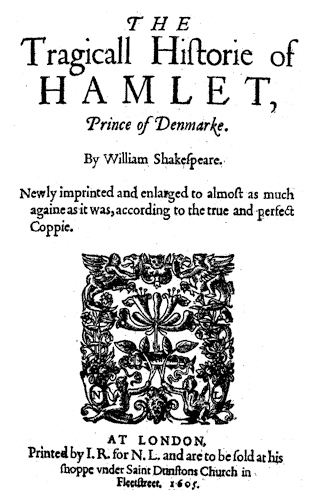
I had acted in a production of Hamlet at the University of Notre Dame and had fallen in love, so to speak, with the prince.  Afterward I spent years reciting Hamlet’s soliloquies.  I loved his character — an endless reservoir of human emotions in there.

And then one day, reading about the Earl of Oxford, I was amazed to learn there had been a real-live Elizabethan, some fifteen years older than “Shakespeare” but living at the same time, who had a life very much like that of Hamlet!

Oxford had been stopped by pirates in the Channel and had talked his way out of a jam pretty much the same way Hamlet did; Oxford brought plays to Court the way Hamlet did; Oxford had married chief minister Burghley’s daughter, reflecting Hamlet’s relationship with Ophelia, daughter of chief minister Polonius; Horatio is Hamlet’s great friend; Horatio Vere was Oxford’s famous military cousin; Horatio and Francisco are on watch in the play; Horatio and his brother Francis were  “the fighting Veres” and Oxford’s  close cousins.

Mark Rylance as Hamlet

Oxford had been sent into wardship – like Bertram!  Oxford had studied astrology and white magic with Dr. John Dee – shades of Prospero! Oxford had fought duels in the street with one faction vs. another – shades of the street-fighting in Romeo and Juliet!  Oxford had accused his wife of infidelity – like Othello!

How is it, I wondered, that my teachers and professors had never mentioned this Hamlet-like nobleman who was connected in some way with virtually all the forerunners of the phenomenon of “Shakespeare”?  Even if it could be shown that Edward de Vere could not have written the Bard’s works, why would we fail to look at his life?

I think the reason for the academy’s failure to study Edward de Vere is that he threatened the cherished belief in the Stratford biography.  He had been hidden from the official record of history until 1920, when J. T. Looney pointed to him as “Shakespeare” – so his entrance onto the record came burdened with the baggage of the authorship issue.  To be interested in Edward Earl of Oxford was to be a kind of traitor.  It suggested that you just might be questioning the traditional image!

Otherwise I see no good explanation for shunning this real-life figure who, like Hamlet, put on “an antic disposition” at Court – in Oxford’s case, acting as the Italianate Englishman, among other roles.

In answer to the critics who shout “conspiracy theory” at us, I’d like to mention that, in the closed society of Elizabeth’s kingdom, writers left clues to the truth all over the place.  They slipped in all kinds of hints while giving themselves “deniability” – Hey, this is just a poem – this is just a play – it’s harmless! – and of course I didn’t intend to say anything off-limits.

For some reason, Oxford’s authorship was off-limits.  It appears, however, that he left behind a veritable self-portrait in Hamlet and other works of literature.

I say to hell with worrying about conspiracy theories.  Something happened more than four centuries ago that official history has covered up.  I say to the critics — Rather than sling such worthless slogans at well-meaning, intelligent folks who love to learn new things about both history and literature, either demonstrate your curiosity or just admit that you don’t give a damn about this fascinating subject matter!

“Do Not So Much as My Poor Name Rehearse … My Name Be Buried” — An Answer to “Why” the Earl of Oxford Used the “Shakespeare” Pen Name

On one of our Internet-based forums discussing the theory that Edward de Vere, 17th Earl of Oxford wrote the “Shakespeare” poems and plays, I recently found my thoughts pouring onto the paper about Oxford’s use of the pen name.  Here’s an edited version:

In my view we Oxfordians make a big mistake by trying to explain “Shakespeare” in conventional authorship terms, that is, by saying Oxford  used the pen name “because he was a nobleman who loved to write poems and plays, but, because it was a disgrace for a noble to take credit for such writing, he adopted a pen name.”

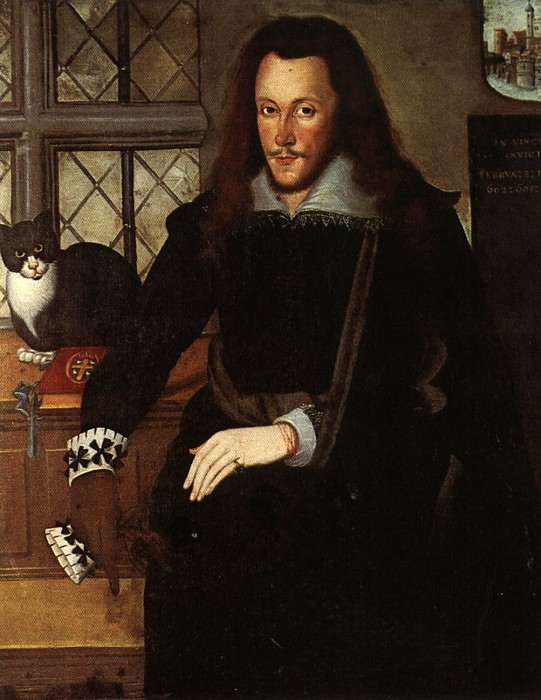
A Portrait of "The Two Henries" circa 1619 -- demonstrating the close tie between Henry Wriothesley, 3rd Earl of Southampton, and Henry de Vere, 18th Earl of Oxford, son of Edward de Vere, 17th Earl of Oxford

I think we Oxfordians also make a mistake saying Oxford used the pen name “because he had lampooned highly placed figures such as William Cecil, Lord Burghley, chief minister to Queen Elizabeth, and exposing his own identity meant exposing them as well.”

The story is much bigger than that.

The fact is Oxford had published songs or poems under his own name, publicly, in the collection Paradyse of Dainty Devices of 1576; and he had advertised his writing earlier in his prefaces to The Courtier of 1572 and Cardanus Comforte of 1573. He had used names of living or deceased persons and fictional names.  He had written anonymously, too.

He had done this through his most productive years in his twenties and thirties, and not until age forty-three in 1593 did he adopt the Shakespeare pen name.

I say we Oxfordians might acknowledge the obvious, that Edward de Vere’s s adoption of “Shakespeare” on Venus and Adonis in 1593 and Lucrece in 1594 was different than all the other cases.  In this instance he linked the pen name by dedication to a person, that is, to Henry Wriothesley, Third Earl of Southampton.  It’s clear that in this case Oxford’s motive in using the pen name  “Shakespeare” was TO CALL ATTENTION TO THE EARL OF  SOUTHAMPTON PUBLICLY, which he did with dedications to him on those two sure-fire bestsellers.

The Earl of Oxford's initials E.O. are on the cover page of The Paradyse of Dainty Devices, 1576, with Edward de Vere's early poems and songs among the collection

We Oxfordians would do well to acknowledge that the case for Venus and Adonis and Lucrece as somehow “anti”-Southampton has NOT been made.  Those who have claimed that either the dedications or the poems carried negative intentions toward Southampton have FAILED TO MAKE THEIR CASE.  There is no evidence for that claim and all the evidence we do have is on the positive side.

Oxford used “Shakespeare” and the dedictions and the narrative poems to call attention to Southampton in a POSITIVE way.

After Burghley’s death in 1598, Oxford’s revisions of his own plays began to have the Shakespeare name on them as well; and there is some evidence that he used these plays to call positive attention to the Essex faction, of which Southampton was a leader.   On its face the conspirators of the 1601 Essex rebellion (and Southampton as leader of its planning) used Richard II by Shakespeare in a positively intentioned way against the power of Secretary Robert Cecil to control the coming succession.

It emerges, therefore, that Oxford’s writing life had two phases:

(1) during the 1560’s, 1570’s and 1580’s, he wrote under various names or anonymously in the service of England under Elizabeth, as court play producer and writer, as head of a team of writers, developing an English cultural identity, rousing unity in the face of threats from within and without; and

(2) from 1593, after Southampton had rejected a Cecil alliance through marriage, when Oxford supported him as “Shakespeare” and, therefore, TURNED AGAINST the Cecil-run government … and after Burghley’s death, with escalation of this struggle culminating in the utterly failed rebellion.

After the abortive revolt and during 1601-1603, it was Robert’s Cecil’s single minded, nerve-wracking task to engineer the succession of James without Elizabeth learning of the secret correspondence with that monarch.  Cecil could not afford any opposition, much less civil war.  If he failed in this endeavor he was a dead man.  He needed all the help and support he could get.

He killed Essex quickly, as his father had killed the Duke of Norfolk in 1572 and Mary Stuart, Queen of Scots in 1587, because these Catholic figures had stood in the way of the continuing Protestant reformation.  Cecil wrote a letter saying he probably could not avoid the Southampton execution — and I think this was part of his own setup for taking credit later on, as the man who got the Queen to spare Southampton’s life.  (In fact it was Cecil himself who decided Southampton should be spared, not because of affection or pity but so he could hold him hostage in the Tower until after King James was safely and securely on the throne.)

As the Oxfordian researcher Nina Green has suggested, Oxford may well have been “40” in the secret correspondence with James; and I recommend G. P. V. Akrigg’s book of James’ letters* including the one to “40”, promising to deal with him “secretly” and “honsestly” and only through Cecil.

*(The Letters of King James VI and I)

King James VI of Scotland & King James I of England

Both Cecil and James needed Oxford’s support, on various levels, and the perpetual confinement of Southampton — as the base commoner “Mr. Henry Wriothesley,” or “the late earl” in legal terms — was a way of securing Oxford’s agreement to help.

If we believe Oxford was Shakespeare, and if we believe he had told the truth publicly to Southampton that “the love I dedicate to your Lordship is without end,” and that “what I have to do is yours,” then we must conclude that Oxford did whatever he could do to ensure that, if he did help James become king and helped Cecil to regain his power, then Southampton would be released with a royal pardon and all his lands and titles restored.

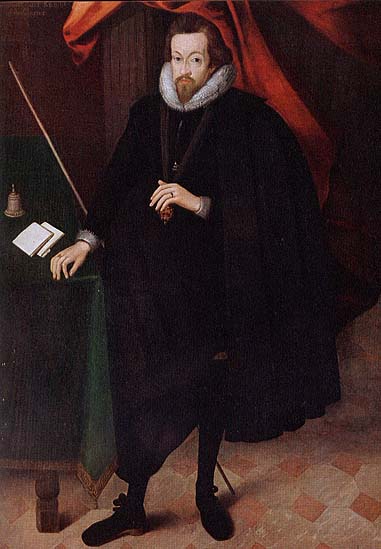
Sir Robert Cecil, Principal Secretary to Elizabeth

These things did result and they have not been explained by conventional history.

But it’s explainable if all those remarkable rewards were in return for Southampton’s pledge to cause no trouble for a peaceful succession.  Oxford and Southampton both had potential disruptive moves to make, moves they did not make.  And they did not make such moves despite the fact that in no way did any of these English nobles really want James on their throne.   And in any case, legally he had no claim because he’d been born on foreign soil.

And it’s here that we have the Sonnets with Oxford’s expressions of fear for Southampton’s life, and his pledge that “my name be BURIED,” not just hidden behind a pen name, but really buried and that he would “die” not onlyphysically, which was a given, but die “to all the world,” that is, his identity would die and be buried.

In his place would be “Shakespeare” the pen name (the so-called Rival Poet) which was the “better spirit” that “doth use your name, and in the praise thereof makes me tongue-tied speaking of your fame.”

This is no routine anonymity as before, but, now, obliteration to “all the world” in terms of his writing and his positive intentions toward Southampton.  And in the sonnets he tells Southampton, “When I perhaps compounded am with clay, do not so much as my poor name rehearse.”

So if we choose to take him seriously as speaking to Southampton under these conditions, then here is the correct answer to the authorship question in terms of “why” — why his name was buried: because he had promised this self-obliteration in order to avoid another civil war in England, to bring about a peaceful succession, and to save the life and future of  Southampton.

All of which was accomplished.

“To all the world” meant to contemporary generations and the next two or three as well.  The sonnets become a “monument” for posterity.  All we need to do is read sonnets 55 and 81 for that theme.  And in 107, the climax of the story, he celebrates all these bittersweet results at once, ending with yet another pledge that this will be Southampton’s monument that will outlast all other kinds of tombs.  And even he, Oxford, “will live in this poor
rhyme,” that is, he will cheat death in the end through these sonnets.

So the Sonnets were not published to be sold, and not printed for commercial reasons.  They were printed in hopes that they would survive until some future time when “all the breathers of this world are dead.”  (81)

The Sonnets are nonfiction dressed as fiction — a statement I make for the Sonnets, uniquely so, NOT for all the other Shakespeare works — and I believe we Oxfordians would do well to emphasize that we do NOT contend that the plays are autobiographical in the strictest sense.  They are works of the imagination, fiction, with many autobiographical elements and, since this is a case of hidden authorship, Oxford undoubtedly inserted clues to his presence.

But as Scott Fitzgerald wrote that the rich are different than you and me, so we can say that the Sonnets are different than the poems and plays.  The Sonnets, unlike the plays of Hamlet and Othello, are written with the personal pronoun “I” in reference to the author himself.

Oxford’s agreement to bury his name and identity was different after the rebellion of 1601 than it had been in 1593 when he first used the Shakespeare pen name.   After 1601, he was pledging to take another huge step, not one he had committed to before:

“Was it his spirit, by spirits taught to write above a mortal pitch,” he asks about “Shakespeare” in Sonnet 86, “that struck me dead?”

He had agreed to be “tongue-tied” by “authority” or officialdom.  The government which he had worked so hard to help, even to the point of testifying against his Catholic cousins — that same government was the cause of his demise.  A terribly sad, ironic story — but a much more dynamic one, and a more accurate one, I contend, than the one we Oxfordians have been trying to communicate over the past ninety years.

I say it’s time to move the authorship debate forward by putting forth the far more powerful, and human, story that is both personal and political — necessarily political, given that our candidate for “Shakespeare” was in fact the Lord Great Chamberlain of England, highest-ranking earl of the realm and — despite his Hamlet-like eccentricities, his Shakespeare-like multiple personalities — an extraordinary figure at the very center of the Elizabethan royal court, within the context of the Anglo-Spanish War that officially spanned the two decades from 1584 to 1604, when England was always a nation struggling to survive as well as grow.

“Let This Sad Interim like the Ocean be” – Pleading with Southampton to Remain Strong in the Tower – Chapter 51 of The Living Record

THE PRISON YEARS
DAY THIRTY IN THE TOWER
Sonnet 56
This Sad Interim
9 March 1601

Oxford records his deep sadness after meeting with Southampton in the Tower, when he had to inform his royal son of the bittersweet bargain with Robert Cecil (and the Queen) as the only way to gain a reprieve from his execution.  His reference to the Ocean (sea of royal blood) is an overt homage to Southampton as a prince or king. He urges Henry Wriothesley to go along with the bargain to save his life.

Hank Whittemore performing "Shake-speare's Treason," the one-man show dramatizing this true story told by Oxford in the Sonnets for posterity (photo by Bill Boyle)

Sweet love, renew thy force!  Be it not said
Thy edge should blunter be than appetite,
Which but today by feeding is allayed,
Tomorrow sharpened in his former might.

So love be thou, although today thou fill
Thy hungry eyes, even till they wink with fullness,
Tomorrow see again, and do not kill
The spirit of Love with a perpetual dullness.

Let this sad Interim like the Ocean be
Which parts the shore, where two contracted new
Come daily to the banks, that when they see
Return of love, more blest may be the view;

As call it winter, which being full of care,
Makes summer’s welcome thrice more wished, more rare.

1 SWEET LOVE, RENEW THY FORCE!  BE IT NOT SAID

SWEET LOVE = royal prince; royal son; “Good night, sweet prince” – Hamlet, 5.2.366; THY FORCE = your royal power and strength; validity, as in “our late edict shall strongly stand in force” – Love’s Labour’s Lost, 1.1.11; your will to live

A contemporary drawing of Essex being executed on February 25, 1601

2 THY EDGE SHOULD BLUNTER BE THAN APPETITE,

EDGE = the cutting side of a blade, echoing the “edge” of the executioner’s axe; “But bears it out even to the edge of doom” – Sonnet 116, line 12; keenness, desire, royal will; “with spirit of honor edged more sharper than your swords” – Henry V, 3.5.38; APPETITE = your desire to live; i.e., Oxford is urging his son to go along with the bargain being made for his life, appealing to his desire to live and eventually be freed from prison

3 WHICH BUT TODAY BY FEEDING IS ALLAYED,

BY FEEDING = by being put out to pasture, so to speak; “Ere we will eat our meal in fear, and sleep in the affliction of these terrible dreams that shake us nightly” – Macbeth, 3.2.18-19; ALLAYED = postponed (with ALL = Southampton, his motto One for All, All for One)

4 TOMORROW SHARP’NED IN HIS FORMER MIGHT.

TOMORROW = “Kind is my love today, tomorrow kind” – Sonnet 105, line 5; FORMER MIGHT = former royal power; “O’er-charged with burden of mine own love’s might” – Sonnet 23, line 8; “Thy pyramids built up with newer might” – Sonnet 123, line 2; “England shall give him office, honour, might” – 2 Henry IV, 4.5.129; “the might of it” – i.e., the might and power of the crown, 2 Henry IV, 4.5.173

5 SO LOVE BE THOU, ALTHOUGH TODAY THOU FILL

SO LOVE BE THOU = so, royal son, be your royal self, since you are you; “This is I, Hamlet the Dane!” – Hamlet, 5.1.255; “But he that writes of you, if he can tell/ That you are you, so dignifies his story” – Sonnet 84, lines 7-8; act like the king you are, and go along with this decision to save your life; in giving up the throne, you help England avoid civil war, and you will gain your life and freedom

Queen Elizabeth I

6 THY HUNGRY EYES, EVEN TILL THEY WINK WITH FULLNESS.

HUNGRY EYES = royal eyes wanting to be who he is; WINK WITH FULLNESS = close or shut because of the power of the sun or royal light; echoing the “winking” of Southampton’s royal eyes or stars or suns;

7 TOMORROW SEE AGAIN, AND DO NOT KILL

TOMORROW SEE AGAIN = stay alive and use your kingly eyes once more; KILL = destroy; echoing the execution of Southampton, still a possibility, with Oxford urging his son to accept the terms of the “ransom” and, thereby, to save himself from being killed.

8 THE SPIRIT OF LOVE WITH A PERPETUAL DULLNESS.

THE SPIRIT OF LOVE = the sacredness of your royal blood (which is the essential and vital part of you); “Th’expense of spirit in a waste of shame” – Sonnet 128, line 1, to Elizabeth, referring to her waste of Southampton’s “spirit of love” or royal blood; Essex in 1597 wrote to Elizabeth thanking her for her “sweet letters, indited by the Spirit of spirits”; PERPETUAL DULLNESS = eternal shame; perpetual confinement in the Tower; eternal death

9 LET THIS SAD IN’T’RIM LIKE THE OCEAN BE

THIS SAD INTERIM = this sorrowful time of your imprisonment (which hopefully is only temporary); OCEAN = kingly; royal blood“Here, then, we have Shakespeare typifying his Friend variously as a sun, a god, an ocean or a sea: three familiar metaphors which he and his contemporaries use to represent a sovereign prince or king” – Leslie Hotson, Mr. W. H., 1964
“Even to our Ocean, to our great King John” – King John, 5.4.57; “The tide of blood in me … shall mingle with the state of floods and flow henceforth in formal majesty” – 2 Henry IV, 5.2.129; “A substitute shines brightly as a king, until a king be by, and then his state empties itself, as doth an inland brook into the main of waters” – The Merchant of Venice, 5.1.94-97; poets alluded to Elizabeth as “Cynthia, Queen of Seas and Lands” – Roy Strong, The Cult of Elizabeth, 52; “Thou art, quoth she, a sea, a sovereign king;/ And lo, there falls into thy boundless flood/ Black lust, dishonour, shame” – Lucrece, 652

The Tower: the official prison-fortress of the monarch

10 WHICH PARTS THE SHORE, WHERE TWO CONTRACTED NEW

CONTRACTED NEW = come together again; “But thou, contracted to thine own bright eyes” – Sonnet 1, line 5; Oxford and his royal son, envisioned as newly contracted

11 COME DAILY TO THE BANKS, THAT WHEN THEY SEE

COME DAILY = like these verses written daily; echoing the “daily” or day-by-day experience of his son in prison; like the tide coming daily to the banks of these “pyramids” or sonnets, as in “No! Time, thou shalt not boast that I do change!  Thy pyramids built up with newer might/ To me are nothing novel, nothing strange” – Sonnet 123, lines 1-3; “Thus they do, sir;
they take the flow of the Nile by certain scales in the pyramid” – Antony and Cleopatra, 2.7.17-18

12 RETURN OF LOVE, MORE BLEST MAY BE THE VIEW!

RETURN OF LOVE = return of royal blood; i.e., when Southampton finally emerges from the Tower, he will be alive and so will his great gift of “love” or royal blood still live; “So thy great gift, upon misprision growing,/ Comes home again, on better judgment making” – Sonnet 87, indicating “misprision” of treason as the new, lesser verdict that will allow Southampton to “come home again” as a free man; BLEST = full of Southampton’s royal and divine blessings; “the blessed sun of heaven” – Falstaff of Prince Hal in 1 Henry IV, 2.4.403

13 AS CALL IT WINTER, WHICH BEING FULL OF CARE,

WINTER = the present time, early March of 1601; this miserable time of your imprisonment and possible death; “How like a Winter hath my absence been/ From thee, the pleasure of the fleeting year” – Sonnet 97, lines 1-2, corresponding with February 8, 1602, and referring to her Majesty’s “pleasure” or command; and with “fleeting” meaning “imprisoned,” echoing the Fleet Prison; “Three winters cold … /Since first I saw you fresh” – Sonnet 104, lines 3-8, corresponding to February 8, 1603, the third winter of Southampton’s confinement; i.e., this entire time of your confinement is a winter; FULL OF CARE = full of Oxford’s care for him, to save his life; “Thou best of dearest, and mine only care” – Sonnet 48, line 7

The White Tower, where Southampton was imprisoned

14 MAKES SUMMER’S WELCOME THRICE MORE WISHED, MORE RARE.

SUMMER’S WELCOME = the welcoming of the golden time of the king, of Southampton as prince, his return to freedom; “Shall I compare thee to a Summer’s day … And Summer’s lease hath all too short a date … But thy eternal Summer shall not fade” – Sonnet 18, lines 1, 4, 9; THRICE = related to the Trinity and also to the previously potential royal family (which is no longer possible) of Elizabeth and Oxford and Southampton; MORE RARE = more royal; “Beauty, Truth, and Rarity,/ Grace in all simplicity” – the royal family of Elizabeth, Oxford and Southampton in The Phoenix and Turtle, 1601, 53-5, being written about now in early 1601

Anticipating the Execution of Southampton – Sonnet 54 – “Sweet Deaths” – The Living Record: Chapter 49

Again from THE MONUMENT, my 900-page edition of The Sonnets:

THE PRISON YEARS
DAY TWENTY-EIGHT IN THE TOWER

The dynasty of the Tudors was symbolised by the Tudor Rose, emblem of the Tudors representing the fusion of the noble factions of Lancaster and York. This fusion was symbolised by the White rose of York and the red rose of Lancaster.

Sonnet 54
Sweet Deaths
7 March 1601

Edward de Vere, 17th Earl of Oxford mournfully anticipates the execution of his royal son Henry Wriothesley, 3rd Earl of Southampton and his death as heir to the Tudor Rose dynasty.  Southampton is the flower of the Tudor Rose, living and dying in this sonnet.

OH how much more doth beauty beauteous seem,
By that sweet ornament which truth doth give.
The Rose looks fair, but fairer we it deem
For that sweet odor which doth in it live!

The Canker blooms have full as deep a dye
As the perfumed tincture of the Roses,
Hang on such thorns, and play as wantonly,
When summer’s breath their masked buds discloses:

But for their virtue only is their show,
They live unwooed, and unrespected fade,
Die to themselves.  Sweet Roses do not so;
Of their sweet deaths are sweetest odors made.

And so of you, beauteous and lovely youth,
When that shall vade, by verse distils your truth.

Robert Cecil -- after the failed Essex Rebellion of 8 February 1601, he had full power and control of Elizabeth and her government

Robert Cecil to George Carew, after March 5, 1601:

“It remaineth now that I let you know what is like to become of the poor young Earl of Southampton, who, merely for the love of the Earl [Essex] hath been drawn into this action, who, in respect that most of the conspiracies were at Drury House, where he [Southampton] was always chief … those that would deal [plead] for him (of which number I protest to God I am one, as far as I dare) are much disadvantaged of arguments to save him…”

– Stopes, 224; i.e., Cecil, dealing with Oxford behind the scenes, is now putting it on record that he hopes the best for Southampton, but that saving him won’t be easy because all evidence goes against him; perhaps to build up the difficulty in anticipation of taking credit for interceding with the Queen on Southampton’s behalf.

1 OH HOW MUCH MORE DOTH BEAUTY BEAUTEOUS SEEM

BEAUTY = Southampton’s blood from Elizabeth; (“That thereby beauty’s Rose might never die” – Sonnet 1, line 2; “thy beauty’s legacy” – Sonnet 4, line 2; BEAUTEOUS = royal, Tudor; (“Seeking that beauteous roof to ruinate” – Sonnet 10, line 7, referring to the House of Tudor)

2 BY THAT SWEET ORNAMENT WHICH TRUTH DOTH GIVE!

SWEET ORNAMENT = royal prince; “Thou that art now the world’s fresh ornament” – Sonnet 1, line 9; “Which like a jewel hung in ghastly night” – Sonnet 27, line 11

For princes are
A model which heaven makes like to itself:
As jewels lose their glory if neglected,
So princes their renowns if not respected.     Pericles, 2.2.10-13

TRUTH = the truth of his Tudor blood; Oxford’s motto Nothing Truer than Truth; in his role as father

Southampton as he appeared at 20 in 1594, eager for military action and fame

3 THE ROSE LOOKS FAIR, BUT FAIRER WE IT DEEM

THE ROSE = the Tudor Rose; FAIR = royal; “From fairest creatures we desire increase,/ That thereby beauty’s Rose might never die” – Sonnet 1, lines 1-2; FAIRER = more royal; with a greater claim to the throne; “But thou art fair, and at thy birth, dear boy, nature and fortune joined to make thee great” – King John, 2.2.51-52

4 FOR THAT SWEET ODOR WHICH DOTH IN IT LIVE.

SWEET ODOR = the royal presence of Southampton within the Rose; “What doth avail the rose unless another took pleasure in the smell? … Why should this rose be better esteemed than that rose, unless in pleasantness of smell it far surpassed the other rose?” – Oxford’s Prefatory Letter to Cardanus’ Comfort, 1573

5 THE CANKER BLOOMS HAVE FULL AS DEEP A DYE

CANKER BLOOMS = Southampton’s disgrace; (blossoms of the dog-rose)

Hath not thy rose a canker, Somerset?
Hath not thy rose a thorn, Plantagenet?        1 Henry VI, 2.4.68-69

To put down Richard, that sweet lovely rose,
And plant this thorn, this canker Bolinbroke?    1 Henry IV, 1.3.173-174

Queen Elizabeth I (1533-1603) - having no known heir of her blood, and refusing to name her son Southampton as successor, she was leaving England on the edge of possible civil war over the throne

FULL AS DEEP A DYE = just as much filled with royal blood; “And almost thence my nature is subdued/ To what it works in, like the Dyer’s hand” – Sonnet 111, lines 6-7; “dye” echoing “die” in the circumstances by which Southampton may be executed

6 AS THE PERFUMED TINCTURE OF THE ROSES,

As the external show of royalty by Tudor Rose heirs, i.e., Oxford is using the plural to refer to the singular, Southampton, who is Elizabeth’s heir by blood; also, the “Roses” or past heirs of the Tudor dynasty, from Henry VII in 1485.

7 HANG ON SUCH THORNS, AND PLAY AS WANTONLY,

HANG = echoing the imminent execution of Southampton; “Which like a jewel hung in ghastly night” – Sonnet 27, line 11; THORNS = disgraces; another play on Elizabeth’s motto Rose Without a Thorn, indicating that Southampton has disgraced and doomed the Tudor Rose Dynasty; “Roses have thorns, and silver fountains mud,/ Clouds and eclipses stain both Moone and Sunne,/ And loathsome canker lives in sweetest bud” – Sonnet 35, lines 2-4, referring to Southampton as “bud” of the Tudor Rose

8 WHEN SUMMER’S BREATH THEIR MASKED BUDS DISCLOSES:

SUMMER’S = golden, kingly; “Shall I compare thee to a Summer’s day?” – Sonnet 18, line 1; MASKED BUDS = hidden or unacknowledged Tudor Rose heirs, i.e., Southampton

MASKED = “Even so my Sunne one early morn did shine/ With all triumphant splendor on my brow,/ But out alack, he was but one hour mine,/ The region cloud [Elizabeth Regina] hath masked him from me now” – Sonnet 33, lines 9-12; “Masking the business from the common eye, for sundry weighty reasons” – Macbeth, 3.1.123-124; BUDS = “Within thine own bud buriest thy content” – Sonnet 1, line 11; “Rough winds do shake the darling buds of May” – Sonnet 18, line 3; DISCLOSES = unfolds to view, opens, as in “The canker galls the infants of the spring too oft before their buttons be disclosed” – Hamlet, 1.3.40; but Southampton is not being “disclosed” as the royal son – except in these private sonnets and, less directly, in Oxford’s works attributed to Shakespeare
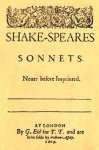
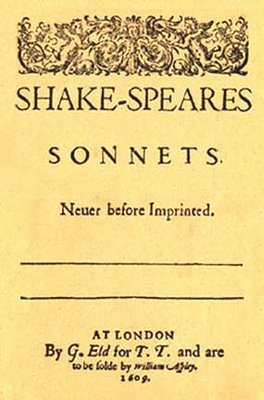
The Book of Sonnets, 1609 - with the space between the lines left blank, indicating the author is not being identified

9 BUT FOR THEIR VIRTUE ONLY IS THEIR SHOW,

Because their only virtue is their appearance

10 THEY LIVE UNWOOED, AND UNRESPECTED FADE,

UN-WOOED = unacknowledged as prince; without being named in succession; “And when a woman woos, what woman’s son/ Will sourly leave her till he have prevailed?” – Sonnet 41, lines 7-8, referring to Elizabeth having “wooed” or promised/tempted her son to hope or expect that she will name him to succeed her

UN-RESPECTED FADE = ignored, un-regarded, held in contempt; and, as such, fail to grow into rightful kingship; “For all the day they view things un-respected” – Sonnet 43, line 2, Oxford speaking of what is seen or perceived of his royal son by the rest of the world; (“un-respected” is used nowhere else in Shakespeare, aside from Sonnets 43 & 54)

If well-respected honor bid me on            1 Henry IV, 4.3.10

As jewels lose their glory if neglected,
So princes their renowns if not respected         Pericles, 2.2.12-13

Throw away respect,
Tradition, form and ceremonious duty         Richard II, 3.2.172-173

To tread down fair respect of sovereignty         King John, 2.2.58

To understand a law, to know the meaning
Of dangerous majesty, when perchance it frowns
More upon humour than advised respect         King John, 4.2.212-214

I come with gracious offers from the king,
If you vouchsafe me hearing and respect         1 Henry IV, 4.3.30-31

11 DIE TO THEMSELVES; SWEET ROSES DO NOT SO,

DIE TO THEMSELVES = as Southampton may die by execution; SWEET ROSES = royal Tudor Rose heirs, i.e., Southampton; “Earthlier happy is the rose distilled, than that which withering on the virgin thorn grows, lives and dies in single blessedness” – A Midsummer Night’s Dream, 1.1.76-78

12 OF THEIR SWEET DEATHS ARE SWEETEST ODORS MADE:

SWEET DEATHS = royal deaths; (again, the plural used for the singular); Southampton’s still-expected execution; also, the extinction of his chance to gain the throne; SWEETEST ODORS = most royal evidence
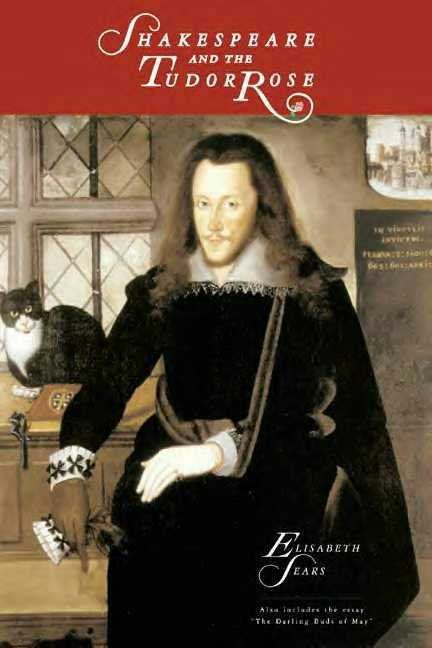
"Shakespeare and the Tudor Rose" by Elisabeth Sears, Meadow Geese Press, 2003 - a ground-breaking book!

13 AND SO OF YOU, BEAUTEOUS AND LOVELY YOUTH,

YOU = Southampton; “But he that writes of you, if he can tell/ That you are you, so dignifies his story” – Sonnet 84, lines 7-8; BEAUTEOUS AND LOVELY YOUTH = royal son of beauty, the Queen; BEAUTEOUS = related to the Queen by blood; (perhaps rather than “beautiful” because of the “E O” within “beauteous); LOVELY = filled with “love” or royal blood; “O Thou my lovely Boy” – Sonnet 126, line 1; “the little Love-God” – Sonnet 154, line 1

14 WHEN THAT SHALL VADE, BY VERSE DISTILLS YOUR TRUTH.

VADE = fade, depart; die; BY VERSE = by these sonnets; (“my” verse – Malone)

DISTILLS = recreates and preserves; “By means of verse your truth is preserved and transmitted to future generations” – Duncan-Jones. Arden Edition of the Sonnets); i.e., Oxford is using the Sonnets to preserve and perpetuate his son’s blood, as opposed to the “distillation” of his royal blood by the begetting of an heir, called for in an earlier time: “But flowers distilled, though they with winter meet,/ Leese but their show, their substance still lives sweet” – Sonnet 5, lines 13-14; and “Then let not winter’s ragged hand deface/ In thee thy summer ere thou be distilled” – Sonnet 6, lines 1-2; and much earlier, when Oxford was four years old, he began studying with Thomas Smith, his first tutor, an expert in distillation

The Tower of London, where Southampton was being held by Cecil until Elizabeth died and James of Scotland became King of England

TRUTH = the truth of your royal blood, which is related to Oxford, Nothing Truer than Truth; “And your true rights be termed a Poet’s rage” – Sonnet 17, line 11; “Thou truly fair wert truly sympathized/ In true plain words by thy true-telling friend” – Sonnet 82, lines 11-12
“Strange Shadows on You Tend” – Sonnet 53 – The Living Record – Chapter 48

DAY TWENTY-SEVEN: SOUTHAMPTON IN THE TOWER
Sonnet 53
Strange Shadows On You Tend
6 March 1601

Now, with Essex dead and the other conspirators also condemned, time grows short for Southampton’s fate to be decided.  The great shadow of Elizabeth Regina’s imperial frown, the “region cloud” of Sonnet 33, spreads over Henry Wriothesley, Earl of Southampton in the Tower.  The tone of Edward de Vere, Earl of Oxford is of increasing worry even as he writes in praise of his son, whom he likens to Adonis of “Venus and Adonis,” the 1593 poem dedicated to him by “Shakespeare.”

Edward de Vere, 17th Earl of Oxford

What is your substance, whereof are you made,
That millions of strange shadows on you tend?
Since every one hath, every one, one shade,

And you, but one, can every shadow lend.
Describe Adonis and the counterfeit
Is poorly imitated after you;
On Helen’s cheek all art of beauty set,
And you in Grecian tires are painted new.

Speak of the spring and foison of the year,
The one doth shadow of your beauty show,
The other as your bounty doth appear,
And you in every blessed shape we know.

In all external grace you have some part,
But you like none, none you, for constant heart.

(Following is an edited “short” version of the treatment of Sonnet 53 in my edition THE MONUMENT):

The Tower of London, where Southampton was held captive until James of Scotland became King James I of England

1 WHAT IS YOUR SUBSTANCE, WHEREOF ARE YOU MADE,
YOUR SUBSTANCE = your inner reality, i.e., your royal blood; “No, no, I am but a shadow of myself: you are deceived, my substance is not here” – 1 Henry VI, 2.3.49-50;

2 THAT MILLIONS OF STRANGE SHADOWS ON YOU TEND?
MILLIONS = countless; expressing, by exaggeration, the outrageousness of the “stain” or “disgrace” that has covered his royal son; SHADOWS = the darkness cast by the Queen’s dark cloud or negative view; (“But the world is so cunning, as of a shadow they can make a substance, and of a likelihood a truth” – Oxford to Burghley, July 1581); “Which, being but the shadow of your son, becomes a sun and makes your son a shadow” – King John, 2.1.499-500; TEND = “attend” or wait upon him as those who attend upon a king; “They ‘tend the crown” – Richard II, 4.1.199; echoing the “tender” (or offer) for acceptance by which Oxford has offered to pay “ransom” for his son’s life.

Title Page of "Venus and Adonis" (1593), by which "Shakespeare" entered the stage of history by his dedication to Southampton inside the book

3 SINCE EVERY ONE HATH, EVERY ONE, ONE SHADE,
EVERY = E. Ver, Edward de Vere; ONE = Southampton, his motto One for All, All for One; EVERY ONE = father and son together; EVERY ONE, ONE SHADE = you and I suffer together under the shadow that is cast over you; Note: “one” occurs six times in this sonnet, “every” occurs three times, “none” twice.

4 AND YOU, BUT ONE, CAN EVERY SHADOW LEND.
AND YOU, BUT ONE = and you, Southampton; ““Since all alike my songs and praises be/ To one, of one, still such, and ever so” – Sonnet 105, lines 3-4; EVERY = E. Ver; “But Henry now shall wear the English crown and be true King indeed; thou but the shadow” – 3 Henry VI, 4.3.49-50

5 DESCRIBE ADONIS AND THE COUNTERFEIT
ADONIS: the young god of Venus and Adonis, i.e., Oxford is referring to his own narrative poem  that he dedicated (as “William Shakespeare”) to Southampton in 1593; Adonis (symbol of male beauty) was once Oxford’s self-portrait (based on the Queen’s attempts to seduce him as a young man in 1571-73, if not earlier); but now Henry Wriothesley is the young Adonis in relation to his mother, Elizabeth, who remains Venus, goddess of Love and Beauty; COUNTERFEIT = likeness; that which is made in imitation of him; portrait of him; “But who can leave to look on Venus’ face … These virtues rare, eche gods did yield a mate./ Save her alone, who yet on th’earth doth reign,/ Whose beauty’s string no god can well distrain” – Oxford poem, published in 1576, writing of Elizabeth, who “doth reign” on earth as Beauty

6 IS POORLY IMITATED AFTER YOU:
POORLY IMITATED = inadequately portraying you

7 ON HELEN’S CHEEK ALL ART OF BEAUTY SET,

Southampton in the Tower (with his cat)

HELEN’S CHEEK = Elizabeth, pictured as Helen of Troy, most beautiful of women; “Within this there is a red/ Exceeds the damask rose;/ Which in her cheeks is spread,/ Whence every favor grows” – Oxford poem in The Phoenix Nest, 1593, writing of Elizabeth; ALL = Southampton; OF BEAUTY SET = expressing your “beauty” or blood from Elizabeth;“What thing doth please thee most?/ To gaze on beauty still” – Oxford poem, part of which appeared in The Arte of English Poesie, 1589

8 AND YOU IN GRECIAN TIRES ARE PAINTED NEW:
GRECIAN TIRES = Greek headdresses or attire; PAINTED NEW = recreated (given new birth) in these private sonnets

9 SPEAK OF THE SPRING AND FOISON OF THE YEAR,
SPRING = time of royal hope; Ver; FOISON = abundant royal blood, kingly bounty

10 THE ONE DOTH SHADOW OF YOUR BEAUTY SHOW,
ONE = Southampton, his motto; SHADOW OF YOUR BEAUTY = the ghostlike appearance of your royal blood from the Queen

11 THE OTHER AS YOUR BOUNTY DOTH APPEAR,
YOUR BOUNTY = your royal bounty; “I thank thee, King, for thy great bounty” – Richard II, 4.1.300; “

12 AND YOU IN EVERY BLESSED SHAPE WE KNOW.
EVERY = E. Ver, Edward de Vere; BLESSED = divine, sacred, godlike, royal; “Look down, you gods, and on this couple drop a blessed crown” – The Tempest, 5.1.201-202;  “A God in love” – Sonnet 110, line 12; “Likely in time to bless a regal throne” – 3 Henry VI, 4.6.74;

Secretary Robert Cecil, who agreed to spare Southampton and release him with a royal pardon -- once James was securely on the throne and he, Cecil, retained his power; the price, for Oxford, was loss of his son's crown and loss of his identity as "Shakespeare"

13 IN ALL EXTERNAL GRACE YOU HAVE SOME PART,
ALL = Southampton, One for All, All for One; EXTERNAL GRACE = show of royalty; “The king is full of grace and fair regard … this grace of kings” – Henry V, 1.1.22, 2 Prologue. 28;

14 BUT YOU LIKE NONE, NONE YOU, FOR CONSTANT HEART.
NONE = opposite of “one” for Southampton; LIKE NONE = like no other; NONE YOU = none like you; also, you are now a nobody; CONSTANT HEART = eternal royal power, with a heart that pumps your royal blood; always noble and royal; “our friends are true and constant” – 1 Henry IV, 2.3.17; “Crowned with faith and constant loyalty … constant in spirit, not swerving with the blood” – Henry V, 2.2., 5, 133; “Therefore my verse to constancy confined,/ One thing expressing, leaves out difference” – Sonnet 105, lines 5-8; “In constant truth to bide so firm and sure” – Oxford’s sonnet in “Shakespearean” form, to Queen Elizabeth, early 1570s

As you can see, Oxford does not use a “code” or any other kind of obscure language.  The words related to royalty and kingship are drawn from his own plays of English royal history, plays issued under the “Shakespeare” name; seeing them clearly in these lines is a matter of perception; and once you see them, you know that their presence in the Sonnets cannot be accidental.