William Niederkorn Reviews “Nine Lives of William Shakespeare” by Graham Holderness in “The Brooklyn Rail”

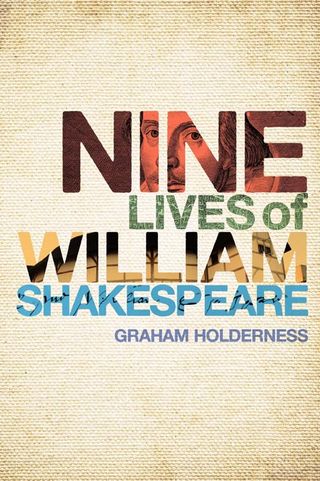
Here’s a fascinating review in The Brooklyn Rail by former New York Times editor and writer William S. Niederkorn, who examines a new book about Shakespeare that may signal the beginning of the Great Paradigm Shift of views about the authorship to which anti-Stratfordians have been looking forward.

The book is Nine Lives of William Shakespeare (Continuum, Dec 2011) by Graham Holderness, a prolific writer about the Bard and an English professor at the University of Hertfordshire, north of London.  Niederkorn calls it a “dazzling satire” in which the author “has ditched the Humpty Dumpty project” of fitting together the contradictory pieces of a traditional Shakespeare biography in favor of examining some individual pieces by themselves.

Niederkorn tells us that the narrator of Holderness’ ninth story is “Edward,” but I  have no idea whether that choice of name owes anything (consciously or unconsciously) to Edward de Vere.  In any case, Edward grows “more and more restless in the poisonous, gnawing knowledge” that certain beliefs about the Bard are “based upon a misunderstanding,” leading him to become “more and more determined to expose the absurdity” of these beliefs.

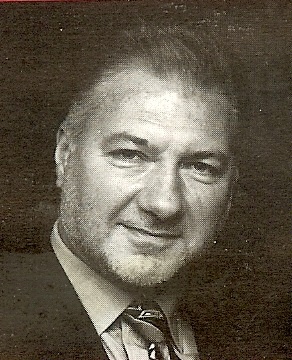
Graham Holderness

Edward the Narrator explains to Dr. Pericles, leader of the so-called Bardolians, that “some people have even ventured to doubt whether Shakespeare himself was the author of the plays, and to propose that they may have been written by someone else.”  Later that night, however, Edward wakes up to see that he is about to be “seized and arrested as a heretic and blasphemer.”

Now I suggest you read the full review in The Brooklyn Rail and discover Niederkorn’s delicious conclusion on your own.

Part One of a New Educational Documentary “The Real Edward de Vere”

Here from The Shakespeare Channel is Part One of The Real Edward de Vere, described as “an amateur documentary about the life of Edward de Vere, 17th Earl of Oxford, made for educational purposes.

The first part, running 11 and 1/2 minutes, is “Childhood and Youth” — written by Mark Garcia and edited by Brian Lake — filmed in various locations in England, including  Oxford’s childhood home of Castle Hedingham in Essex, with plenty of interesting images.

On “Anonymous” Panel with Roland Emmerich

Hank on the Panel with Roland Emmerich (to our left) after the “Anonymous” advance premier in Portland, Oregon:


Part Two of Reason 20 — The Dedications Reveal Oxford’s Personal Relationships with Authors Whose Works Would Lead to “Shakespeare”

This part of Reason No. 20 includes several of the many public dedications to Edward de Vere Earl of Oxford, to indicate the scope of his personal relationships with other writers.  The way I see it, anyone who would eventually create the works of “Shakespeare” could not have grown and developed as an artist in a vacuum; on the contrary, he must have been part of a group or even a “community” of fellow authors, poets and playwrights.

Oxford was not only part of such a community; their tributes make clear that he was their leader.  

Arthur Golding (Histories of Trogus Pompeius) wrote to him in 1564: “It is not unknown to others, and I have had experiences thereof myself, how earnest a desire your Honor hath naturally grafted in you to read, peruse, and communicate with others as well the histories of ancient times, and things done long ago, as also of the present estate of things in our days, and that not without a certain pregnancy of wit and ripeness of understanding.”

Thomas Underdowne (Aethiopian History) told him in 1569 that “matters of learning” were good for a nobleman, but then warned the earl that “to be too much addicted that way, I think it is not good.”

(In that same year 19-year-old Oxford ordered “a Geneva Bible gilt, a Chaucer, Plutarch’s works in French, with other books and papers” as well as “Tully’s and Plato’s works in folio, with other books.”  Sounds indeed like a young man “addicted” to learning!)

When Thomas Bedingfield dedicated his translation of Cardanus Comforte to Oxford in 1573, he told him that “I do present the book your Lordship so long desired,” confirming that the earl had been personally involved in this publication [for which he contributed both a Letter to the Reader and a poem].   He reminds Oxford of “the encouragement of your Lordship, who (as you well remember), unawares to me, found some part of this work and willed me in any wise to proceed therein.”

Also in 1573 the distinguished physician Thomas Twyne (Breviary of Britain) referred to Oxford as being “in your flower and tender age” before inviting him to bestow  upon his work “such regard as you are accustomed to do on books of Geography, Histories, and other good learning, wherein I am privy your honour taketh singular delight.”

One of Oxford’s secretaries, Anthony Munday (Mirror of Mutability), told the earl in 1579 that he looked forward to “the day when as conquerors we may peacefully resume our delightful literary discussions.”

Munday was apparently referring to the rivalry between the Euphuists under Oxford and the Romanticists who included Philip Sidney and Gabriel Harvey.  His reference to “our delightful literary discussions” offers a glimpse of Oxford personally engaged with other writers who were developing a new English literature and drama leading to “Shakespeare.”

And the works created by members of this circle (such as John Lyly, another of his secretaries) would later become known as “contemporary sources” upon which “Shakespeare” drew.

Thomas Watson (Hekatompathia, or The Passionate Century of Love) in 1580 reminded Oxford that he had “willingly vouchsafed the acceptance of this work, and at convenient leisures favorably perused it, being as yet but in written hand.”  He cited Oxford as a kind of literary trend-setter, one whose approval would move others to approve as well; and because of this influence he had, his acceptance of Watson’s work in manuscript meant that “many have oftentimes and earnestly called upon me to put it to the press.”

Angel Day (The English Secretary) wrote in 1586 to Oxford about “the learned view and insight of your Lordship, whose infancy from the beginning was ever sacred to the Muses.”

Robert Greene (Card of Fancy) wrote publicly to Oxford in 1584 that he was “a worthy  favorer and fosterer of learning [who] hath forced many through your excellent virtue to offer the first-fruits of their study at the shrine of your Lordship’s courtesy.”

In other words, Oxford encouraged young writers who were working on their very first works to be be published, guiding them to the press.

In 1591 the composer John Farmer, who apparently lived in Oxford’s household, dedicated his first songbook (Plain-Song) to the earl, saying he was “emboldened” because of “your Lordship’s great affection to this noble science” (music) – which, of course, must be said also of Shakespeare.  In his second dedication (First Set of English Madrigals, 1599), Farmer told Oxford that “using this science as a recreation, your Lordship have over-gone most of them that make it a profession.”

So it’s not just the dedications, per se, that are impressive here; it’s also that the comments and praises appear to be absolutely genuine and heartfelt.   Oxford may have had many faults of character, such as a tendency to be jealous and vengeful, but among his fellow writers and other artists he must have been unusually spirited and generous.  Perhaps his relationship with them was akin to Prince Hamlet’s relationship with the players:

“You are welcome, masters!  Welcome, all!  I am glad to see thee well.  Welcome, good friends … Masters, you are all welcome.  We’ll e’en to it like French falconers, fly at anything we see.  We’ll have a speech straight.  Come, give us a taste of your quality.  Come, a passionate speech!”  

[All added emphases above are mine.]

Reason No. 19 to Believe Edward de Vere was “Shakespeare”: The Families of Hamlet and Oxford as Mirror Reflections

One of the most obvious links in the chain of evidence that connects Edward de Vere the seventeenth Earl of Oxford to “Shakespeare” is the similarity of Hamlet’s and Oxford’s family relationships.  In fact this reason to believe that Oxford wrote the play Hamlet, as well as all the other Shakespeare works, is so clear that I’ve kept putting it aside as being too obvious or too easy.   Well, I might as well get it over with, so here’s Reason No. 19 in all its simple clarity…

Queen Gertrude as played by Glenn Close

Queen Gertrude in the play is the mother of Prince Hamlet, while Queen Elizabeth in real life was the official mother of Lord Oxford.  [At age twelve in 1562 he became the first of eight royal wards during her reign.]

Polonius as played by Eric Porter

Lord Chamberlain Polonius is the chief adviser to Queen Gertrude, while William Cecil Lord Treasurer Burghley was the chief adviser to Queen Elizabeth.  [He held the post from the Queen’s accession in November 1558 until his death in August 1598, when his second son, Principal Secretary Robert Cecil, officially took over his father’s unique role behind the throne.]

Hamlet is engaged to young Ophelia, daughter of Polonius, while in real life Oxford became engaged to fifteen-year-old Anne Cecil, daughter of Burghley.   [Oxford and Anne were married in December 1571 when he was twenty-one and she had turned fifteen.]

Ophelia as played by Helena Bonham Carter

Ophelia’s older brother Laertes goes off to Paris, his behavior causing great distress for his father, Polonius, who recites those “precepts” to him as guidance, while in real life Anne Cecil’s eldest brother Thomas Cecil went off to Paris, his behavior causing great distress for his father, Burghley, who wrote him long letters full of wise “precepts” as guidance.  [In the final act of the play, in my view, Laertes becomes the second son, Robert Cecil.]

SEE MARK ALEXANDER’S “25 CONNECTIONS” RE: HAMLET & OXFORD (It’s a PDF download of Power Point)

THE LINE-UP (again):

Hamlet, Prince of Denmark – Oxford, Lord Great Chamberlain of England

Gertrude, Queen of Denmark – Elizabeth, Queen of England

Polonius, Chief Minister to Queen Gertrude – Burghley, Chief Minister to Queen Elizabeth

Ophelia, daughter of Polonius – Anne Cecil, daughter of Burghley

Laertes, son of Polonius – Thomas and Robert Cecil, sons of Burghley

And, for example:

Horatio Vere (1565-1635), cousin of Edward de Vere; with his brother Francis they were "The Fighting Veres"

Horatio, favorite friend of Hamlet – Horatio Vere, favorite cousin of Oxford

Francisco, a soldier – Francis Vere, soldier and cousin of Oxford

[Oh, yes – and Claudius, who has murdered Hamlet’s father and married his mother the Queen, appears to reflect Queen Elizabeth’s lover Robert Dudley, Earl of Leicester, whom Oxford may have suspected of having caused the death of his own father.]

So in this most autobiographical of Shakespeare’s plays, we find the protagonist in virtually the same web of family relationships at Court as that in which Edward de Vere is to be found in the contemporary history.  Traditional scholars may ask rhetorically, “Well, now, you’re not claiming this as proof that Oxford wrote Hamlet, are you?”

“No, of course not,” I might reply, “but doesn’t this give you a little queasy feeling in the gut?  I mean, don’t you have the slightest tremor of doubt that Will of Stratford could have or would have written such a play?  And do you think this mirror image of family relationships can be mere coincidence?”

James Shapiro argues in Contested Will [p. 177] that “such claims about representing on the public stage some of the most powerful figures in the realm betray a shallow grasp of Elizabethan dramatic censorship.”  J. Thomas Looney, who in 1920 first suggested Oxford as Shakespeare, “didn’t understand that Edmund Tilney, the Master of the Revels, whose job it was to read and approve all dramatic scripts before they were publicly performed, would have lost his job – and most likely his nose and ears, if not his head, had he approved a play that so transparently ridiculed privy councilors past and present,” Shapiro adds.

Well, in the play itself the author may have supplied one answer to that argument, when Polonius at the top of Act 3, Scene 4, speaking of Hamlet, tells Queen Gertrude: “He will come straight.  Look you lay home to him.  Tell him his pranks have been too broad to bear with, and that your Grace hath screened and stood between much heat and him.”  (My emphasis)

In other words, Polonius-Burghley reminds Gertrude-Elizabeth that Hamlet-Oxford has taken too many liberties, unbearably so, but nonetheless the Queen has protected him from “much heat” and/or reprisals by government officials [such as Tilney] as well as by his enemies at court.

Shapiro is right, however, in one respect: the playwright surely would have lost his head … if he had really been Shakspere of Stratford!

Lilian Winstanley in Hamlet and the Scottish Succession (1921) writes on p. 122 about Polonius-Burghley and the use of spies:

“Intercepted letters and the employment of spies were, then, a quite conspicuous and notorious part of Cecil’s statecraft, and they are certainly made especially characteristic of Shakespeare’s Polonius. Polonius intercepts the letters from Hamlet to his daughter; he appropriates Hamlet’s most intimate correspondence, carries it to the king, and discusses it without a moment’s shame or hesitation: he and the king play the eaves­dropper during Hamlet’s interview with Ophelia: he himself spies upon Hamlet’s interview with his mother. It is impossible not to see that these things are made both futile and hateful in Polonius, and they were precisely the things that were detested in Cecil….”

Quite a couple of families, eh?

“Shakespeare-Oxford” Books by Whittemore now on Kindle

I’m pleased to announce that the following books are now available on the KINDLE format — and  can be viewed for free at KINDLE FOR PC — a service from Amazon that I hadn’t known about until recently: THE MONUMENT ... SHAKESPEARE’S SON AND HIS SONNETS

… and SHAKE-SPEARE’S TREASON [script of the one-man show by me and Ted Story] …

A Flyer for the Show

Did Young Oxford Witness an Event That Became the Turning Point of “Hamlet”? Reason Number 17…

When Edward de Vere the seventeenth Earl of Oxford was barely into his teens, he witnessed a real-life event that was virtually the same as the one “Shakespeare” would create many years later for the dramatic turning point of Hamlet when the Prince puts on a play to “catch the conscience of the King.”

Oxford was 14 on Queen Elizabeth's royal progress to Cambridge in 1564, the year she had hired a coach builder from the Netherlands (Gullian Boonen) who introduced the "spring suspension" to England

Fourteen-year-old Oxford was on the 1564 royal summer progress when Queen Elizabeth paid her historic visit to Cambridge University for five thrilling days and nights.

Chancellor William Cecil (later Lord Burghley) was in charge while his arch political enemy, High Steward Robert Dudley (later the Earl of Leicester) acted as master of ceremonies; but then a single, unplanned event could not have failed to make a lasting impression on young Edward.

Hamlet puts on a play to "catch the conscience of the King."

Elizabeth was set to leave on Thursday, August 10, 1564 for a 10-mile ride to the home of Sir Henry Cromwell at Hinchingbrooke, where she was to spend the night; and her Majesty was eager to get going.

Although young Oxford was a university student (upon whom the queen bestowed an honorary degree during her visit), he was on the progress with her and surely witnessed what happened next.

Hinchinbrooke House, where Elizabeth I of England stayed the night after the Cambridge visit in August 1564

According to Guzman de Silva, the Spanish ambassador, Elizabeth made a speech praising all the plays or “comedies” and disputations, but some of the anti-Catholic students “wished to give her another representation, which she refused in order to be no longer delayed.” 

But the students were so anxious for her to hear their play that they “followed her [to Hinchingbrooke] and so importuned her that at last she consented.”

So that evening, in a courtyard, an exhausted Queen of England gathered with members of her Court by torchlight for the student production.  It turned out to be a distasteful burlesque intended to mock certain Catholic leaders who had been imprisoned in the Tower.

The university atmosphere had become charged with the rapidly developing Protestant radicalism known as the Puritan movement, but the queen and Cecil were ending hostilities with France while trying to maintain good relations with Catholic Spain, so Elizabeth was in no mood for anti-Papal displays that de Silva would surely report back to King Philip, which, in fact, he did:

“The actors came in dressed as some of the imprisoned bishops.  First came the Bishop of London carrying a lamb in his hands as if he were eating it as he walked along, and then others with devices, one being in the figure of a dog with the Host in his mouth … The Queen was so angry that she at once entered her chamber, using strong language; and the men who held the torches, it being night, left them in the dark…”

Queen Elizabeth I attends a play at one of her palaces

Imagine how this scene must have struck young Oxford!  Here was vivid proof that a dramatic representation could directly alter the emotions of the monarch.  Here was spontaneous evidence of the power of a play to affect Elizabeth’s attitude and perhaps even her decisions.

Did the mature dramatist “Shakespeare” later recall this event when he came to write the “Mousetrap” scene of Hamlet, setting it at night with the King’s guards carrying torches?  When the Queen rose in anger at the students and rushed off, did chief minister Cecil call to stop the burlesque, as chief minister Polonius would do in “Hamlet”?  Did Elizabeth call for light as Claudius does in the play?

Her Majesty swept away using “strong language” as the torchbearers followed, leaving all “in the dark,” and the author of Hamlet would write:

Ophelia: The King rises.

Hamlet: What, frighted with false fire?

Gertrude (to King Claudius): How fares my lord?

Polonius: Give o’er the play!

King: Give me some light!  Away!

All: Lights, lights, lights!

Young Oxford was already a well-tutored scholar whose Renaissance outlook had drawn him to literature and history among a myriad of fields; and Elizabeth, 31, had displayed her own Renaissance spirit and love for learning when she and her retinue had entered Cambridge that summer.

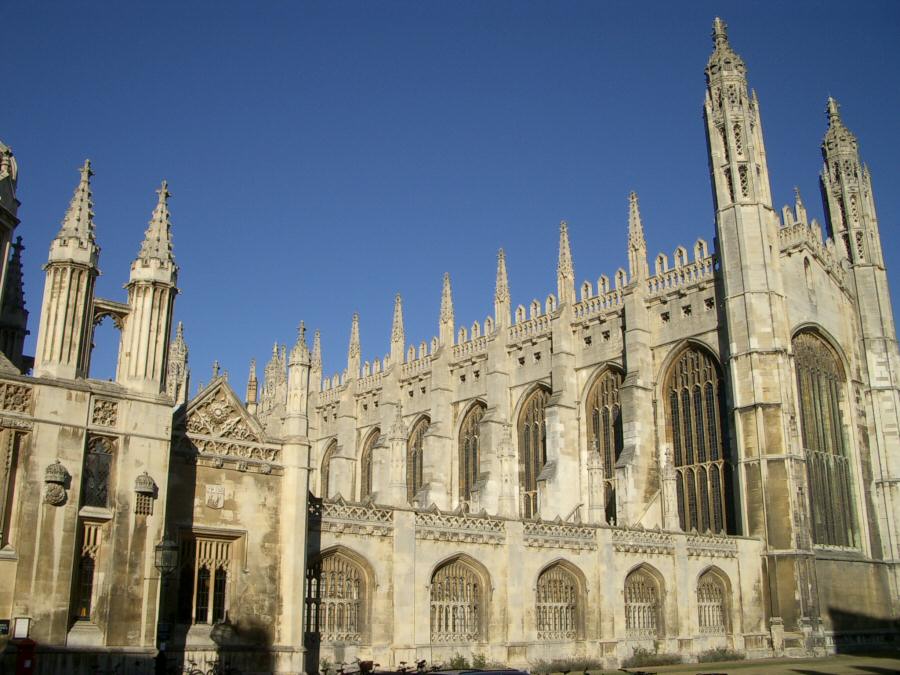
Interior of King's College Chapel, where plays were performed for the Queen in 1564

The Chapel of King’s College had been transformed into a “great stage” and she had spent three of the five nights feasting on “comedies and tragedies.”

The King's College Chapel of Cambridge University

Now, after traveling with the Queen and her Court to Hinchingbrooke, the fourteen-year-old nobleman whose earldom motto was “Nothing Truer than Truth” had witnessed the power of a theatrical performance to stir his sovereign to rage.

Was this the young “Shakespeare,” already storing away the experience and looking ahead to the days at the royal court, when he would “catch the conscience” of his Queen?

I think it was!

Some of the Sources:

University Drama in the Tudor Age by Frederick Boas, 1914

The Progresses and Public Processions of Queen Elizabeth by John Nichols, 1823

Hamlet, Prince of Denmark, the mousetrap scene, Act 3, scene 3

The Education of Young Shakespeare by Hank Whittemore, spring 2002 edition of Shakespeare Matters, the newsletter of the Shakespeare Fellowship

William Faulkner’s Nobel Prize Speech — A Description of the Real Shakespeare

William Faulkner (1897-1962) received the Nobel Prize in Literature for 1949.  Three major works that exploded from his pen within a short space of time – The Sound and the Fury (1929), As I Lay Dying (1930) and Light of August (1932) – have become American classics and are on Modern Library’s list of the 100 Best English-Language Novels of the 20th Century.  At the Nobel Banquet at the City Hall in Stockholm on December 10, 1950, Faulkner delivered a now-famous speech that, for me, serves as yet another reminder that the Shakespeare “authorship question” really does matter.

He referred to his “life’s work in the agony and sweat of the human spirit, not for glory and least of all for profit,” which is exactly what we would expect to hear from the author of Hamlet and King Lear as well as from the man who wrote the tortured lines of the sonnets such as number 66 in which he pens a virtual suicide note, listing reasons he would prefer to die: “Tired with all these, for restful death I cry … Tired with all these, from these would I be gone.”

Faulkner told of the “anguish and travail” to which he was dedicated; he focused on “the problems of the human heart in conflict with itself, which alone can make good writing, because only that is worth writing about, worth the agony and the sweat.”

Such cannot be said of the traditional mythology of Shakespeare, who, we are told, wrote primarily not out of experience but with only a part of himself, keeping one eye always on the box office.  But that traditional figure cannot be the man who wrote Hamlet’s dying plea to Horatio to “absent thee from felicity awhile and in this harsh world draw thy breath in pain to tell my story.”

Accepting his award, Faulkner urged any young writer to leave “no room in his workshop for anything but the old verities and truths of the heart, the old universal truths lacking which any story is ephemeral and doomed – love and honor and pity and pride and compassion and sacrifice.

“Until he does so, he labors under a curse. He writes not of love but of lust, of defeats in which nobody loses anything of value, of victories without hope and, worst of all, without pity or compassion. His griefs grieve on no universal bones, leaving no scars. He writes not of the heart but of the glands…

“I believe that man will not merely endure: he will prevail. He is immortal, not because he alone among creatures has an inexhaustible voice, but because he has a soul, a spirit capable of compassion and sacrifice and endurance.  The poet’s, the writer’s, duty is to write about these things. It is his privilege to help man endure by lifting his heart…”

Here’s the full speech as later published:

Ladies and gentlemen,

I feel that this award was not made to me as a man, but to my work – a life’s work in the agony and sweat of the human spirit, not for glory and least of all for profit, but to create out of the materials of the human spirit something which did not exist before. So this award is only mine in trust. It will not be difficult to find a dedication for the money part of it commensurate with the purpose and significance of its origin. But I would like to do the same with the acclaim too, by using this moment as a pinnacle from which I might be listened to by the young men and women already dedicated to the same anguish and travail, among whom is already that one who will someday stand here where I am standing.

Our tragedy today is a general and universal physical fear so long sustained by now that we can even bear it. There are no longer problems of the spirit. There is only the question: When will I be blown up? Because of this, the young man or woman writing today has forgotten the problems of the human heart in conflict with itself, which alone can make good writing, because only that is worth writing about, worth the agony and the sweat.

He must learn them again. He must teach himself that the basest of all things is to be afraid; and, teaching himself that, forget it forever, leaving no room in his workshop for anything but the old verities and truths of the heart, the old universal truths lacking which any story is ephemeral and doomed – love and honor and pity and pride and compassion and sacrifice. Until he does so, he labors under a curse. He writes not of love but of lust, of defeats in which nobody loses anything of value, of victories without hope and, worst of all, without pity or compassion. His griefs grieve on no universal bones, leaving no scars. He writes not of the heart but of the glands.

Until he re-learns these things, he will write as though he stood among and watched the end of man. I decline to accept the end of man. It is easy enough to say that man is immortal simply because he will endure: that when the last dingdong of doom has clanged and faded from the last worthless rock hanging tide-less in the last red and dying evening, that even then there will still be one more sound: that of his puny inexhaustible voice, still talking.

I refuse to accept this. I believe that man will not merely endure: he will prevail. He is immortal, not because he alone among creatures has an inexhaustible voice, but because he has a soul, a spirit capable of compassion and sacrifice and endurance. The poet’s, the writer’s, duty is to write about these things. It is his privilege to help man endure by lifting his heart, by reminding him of the courage and honor and hope and pride and compassion and pity and sacrifice which have been the glory of his past. The poet’s voice need not merely be the record of man, it can be one of the props, the pillars to help him endure and prevail.

The Earl of Oxford in “The Arte of English Poesie” of 1589 — Reason No. 15 Why He Became “Shakespeare” in 1593

Number 15 on this list — as it steadily builds to 100 reasons to believe the Earl of Oxford was “Shakespeare” — involves his prominent place in an anonymous work The Arte of English Poesie, published in 1589 and regarded as the central text of Elizabethan courtly politics.

"The Arte of English Poesie" - 1589

Oxford’s position in the world of letters had already been stated unequivocally in 1586, when William Webbe declared in A Discourse of English Poetry:

“I may not omit the deserved commendations of many honourable and noble Lords and Gentlemen in Her Majesty’s Court, which, in the rare devices of poetry have been, and yet are, most skillful; among whom the Right Honourable Earl of Oxford may challenge to himself the title of the most excellent among the rest.”  [Emphasis is mine]

Now in 1589, three years later, The Arte of English Poesie by an unnamed author is published by Richard Field, who will soon issue Venus and Adonis of 1593 and Lucrece of 1594, both dedicated by “William Shakespeare” to Henry Wriothesley, third Earl of Southampton – the first and only times this previously unknown poet will dedicate any literary or dramatic work to anyone.

Modern scholars have attributed The Arte to George Puttenham, although others believe the author was Oxford’s friend John, Lord Lumley, but last year Richard M. Waugaman set forth a case for Oxford’s own authorship instead.  [See Brief Chronicles, the online journal of the Shakespeare Fellowship, and Waugaman’s own online site The Oxfreudian.]

Partly the book may represent Oxford’s “eloquent pleading for the Queen’s commission for his writing the pro-Tudor ‘Shakespeare’ history plays,” Waugaman suggests, noting it “champions the persuasive power of poesy historical, while emphasizing that it [poetry or drama] is all the more instructive if it is not slavishly factual.”

The Arte is dedicated to Oxford’s father-in-law [and former guardian] William Cecil Lord Burghley, but it’s actually addressed to Elizabeth herself.  It emphasizes the importance of deception, disguise and anonymity.  The unnamed author says that many members of the nobility or gentry “have no courage to write & if they have, yet are they loath to be a known of their skill,” and continues:

“So as I know very many notable Gentlemen in the Court that have written commendably, and suppressed it again, or else suffered it to be published without their own names to it: as if it were a discredit for a Gentleman to seem learned and to show himself amorous of any good Art.”   [My emphasis]

A page from "The Arte" showing the Elizabethans' interest in structure, form, shape, architectural form and so on

Later he begins to use names:

“And in her Majesty’s time that now is are sprung up another crew of Courtly makers, Noble men and Gentlemen of her Majesty’s own servants, who have written excellently well as it would appear if their doings could be found out and made public with the rest, of which number is first that noble Gentleman Edward Earle of Oxford, Thomas Lord of Bukhurst, when he was young, Henry Lord Paget, Sir Philip Sidney, Sir Walter Raleigh, Master Edward Dyer, Master Fulke Greville, Gascoigne, Britton, Turberville and a great many other learned Gentlemen, whose names I do not omit for envy, but to avoid tediousness, and who have deserved no little commendation.”  [My emphasis]

Does Oxford head the above list because, as Webbe had announced in no uncertain language, he’s the best writer?  Or is he listed first because of his nobleman’s rank?  Our brethren on the Stratfordian side prefer the latter interpretation, and I won’t argue here except to note that the author surely knew he was putting a spotlight on Oxford’s literary work.

Moreover, on the very next page the anonymous author of The Arte names just a few playwrights: “For Tragedy Lord Buckhurst and Master Edward Ferrys do deserve the highest praise: the Earl of Oxford and Master Edwards of Her Majesty’s Chapel for Comedy and Enterlude.”  [My emphasis]

Edwards had been in charge of the Children of the Chapel from 1561 until he died in 1566, a period when Oxford [age eleven to sixteen] was studying with private tutors and receiving honorary degrees from Cambridge and Oxford.  Edwards is credited with writing two plays:  Damon and Pithias, the first English “tragical comedy,” set in the court of Dionysius and performed for Elizabeth’s court in 1565; and Palamon and Arcyte, a “lost” play based on Chaucer’s A Knight’s Tale [and regarded as a possible source for The Two Noble Kinsman attributed to Shakespeare and Fletcher], performed for the Queen at Oxford in 1566.

I believe young Edward de Vere must have written, or at least co-written, those two plays credited to Richard Edwards.  A decade later in 1576 several poems by Oxford [signed with his initials E.O.] appeared in The Paradise of Dainty Devices, an anthology that claims Edwards had compiled it before his death in 1566 – in which case, if true, it’s possible that Oxford’s poems were written no later than his sixteenth year [although he surely could have added to them any time up to 1576, since the likelihood is that Oxford himself caused the anthology to be published].

The Paradise became hugely popular, going into ten editions over the next three decades.
An excerpt of one of Oxford’s poems was reprinted in The Arte of English Poesie of 1589, wherein the anonymous author wrote:
“Edward Earl of Oxford, a most noble and learned gentleman, made in this figure of response an emblem of Desire, otherwise called Cupid, which for excellency and wit I set down some of the verses, for example.”
The excerpt follows:

When wert thou born desire?

In pomp and prime of May,

By whom sweet boy wert thou begot?

By good conceit men say,

Tell me who was thy nurse?

Fresh youth in sugared joy.

What was thy meat and daily food?

Sad sighes with great annoy.

What hadst thou then to drink?

Unfeigned lovers tears.

What cradle wert thou rocked in?

In hope devoid of fears.

What was this poem really about?  Well, The Arte elsewhere speaks of a poet as a “dissembler” who “by reason of a secret intent not appearing by the words, as when we go about the bush, and will not in one or a few words express that thing which we desire to have known, but do choose rather to do it by many words.”

He offers the following example of four lines referring to Queen Elizabeth – not by name, but in words that “any simple judgment might easily perceive” it to be her:

Elizabeth I of England

When Princes serve, and Realms obey,

And greatest of Britain kings begot:

She came abroad even yesterday,

When such as saw her knew her not.

“And the rest followeth, meaning her Majesty’s person, which we would seem to hide leaving her name unspoken, to the intent the reader should guess at it: nevertheless upon the matter did so manifestly disclose it, as any simple judgment might easily perceive by whom it was meant, that is by Lady Elizabeth, Queen of England and daughter to King Henry the Eighth, and therein resteth the dissimulation.”  [My emphasis]

In this same year of 1589 Richard Field would also publish the second edition of Ovid’s Metamorphoses, credited in 1567 to Oxford’s uncle Arthur Golding but more likely translated with youthful zest by the young earl himself.   Here at the end of the tumultuous decade of the 1580’s, Oxford was about to leave public life and become something of a recluse.

Now in 1589, was he using the press of Richard Field to make a final appearance as an identified poet?  Was he withdrawing from the world while preparing to use the same publisher to reappear as “Shakespeare” just four years later, in 1593?

Reason No. 11 (Part Two): Oxford’s Dedicatory Letter is Filled with Words, Thoughts and Expressions to be Used by “Shakespeare”

The Oxford Universal Dictionary cites “Shakespeare” as the first person to write “persuade” and “murdered” as he used those words here:

“… your king … sends me a paper to persuade me patience?” – 3 Henry VI

“’Glamis hath murdered sleep…’” – Macbeth  

But Edward de Vere Earl of Oxford had used “persuade” and “murdered” in those same ways much earlier, when he was twenty-three, within his dedicatory letter to the translator of Cardanus Comfortein 1573:

“And because next to the sacred letters of divinity, nothing doth persuade the same more than philosophy, of which your book is plentifully stored, I thought myself to commit an unpardonable error to have murdered the same in the waste bottoms of my chests.”

"The Mysterious William Shakespeare" (1984, 1992) by Charlton Ogburn Jr.

Charlton Ogburn Jr. reported these findings in The Mysterious William Shakespeare (1984), supporting the theory that Oxford himself was the author of 3 Henry VI and Macbeth, in which case he was simply using “persuade” and “murdered” as he had done years before.   Centuries later “Shakespeare” would be credited with creating those word usages without anyone noticing that in fact it was Edward de Vere who had created them.

The above is just a tiny example of what the world will discover once Oxford and “Shakespeare” are recognized as one and the same man.

William Plumer Fowler’s magnum opus,  Shakespeare Revealed in Oxford’s Letters (1986), will one day be recognized as a major contribution to studies of Shakespearean authorship; and most of the examples cited below are taken from that important work of 872 pages.

Shakespeare Revealed in Oxford's Letters (1986) by William Plumer Fowler

Following is the first paragraph of Oxford’s prefatory dedication addressed “To my loving friend Thomas Bedingfield Esquire, one of Her Majesty’s gentlemen pensioners.”   I have underlined words and phrases that will appear in the plays, poems and sonnets to be published under the “Shakespeare” name two or three decades after 1573:

After I had perused your letters, good Master Bedingfield, finding in them your request far differing from the desert of your labor, I could not choose but greatly doubt whether it were better for me to yield you your desire, or execute mine own intention towards the publishing of your book. For I do confess the affections that I have always borne towards you could move me not a little. But when I had thoroughly considered in my mind of sundry and divers arguments, whether it were best to obey mine affections or the merits of your studies, at the length I determined it better to deny your unlawful request than to grant or condescend to the concealment of so worthy a work. Whereby as you have been profited in the translating, so many may reap knowledge by the reading of the same, that shall comfort the afflicted, confirm the doubtful, encourage the coward, and lift up the base-minded man, to achieve to any true sum or grade of virtue, whereto ought only the noble thoughts of men to be inclined.

Oxford: “After I had perused your letters, good Master Bedingfield…”

Shakespeare: “Have you perused the letters from the pope” – 1 Henry VI, 5.1.1

Oxford: “…finding in them your request far differing from the desert of your labor, I could not choose but greatly doubt…”

Shakespeare: “I cannot choose but pity her” – The Two Gentlemen of Verona, 4.4.77

Oxford: “… whether it were better for me to yield you your desire, or execute mine own intention towards the publishing of your book.”

Shakespeare: “I’ll force thee to yield to my desire” – The Two Gentlemen of Verona, 5.4.59

Shakespeare: “We’ll execute your purpose” – Troilus and Cressida, 3.3.50

Shakespeare (Following the same sentence construction used above by Oxford): “Whether ‘tis nobler in the mind to suffer the slings and arrows of outrageous fortune, or to take arms against a sea of troubles” – Hamlet, 3.1.55

Oxford: “For I do confess the affections that I have always borne towards you could move me not a little.”

Shakespeare: “For Polixenes, with who I am accused, I do confess” – The Winter’s Tale, 3.2.62

Shakespeare: “You … have misdemeaned yourself, and not a little” – Henry VIII, 5.3.14

Oxford: “But when I had thoroughly considered in my mind…”

Shakespeare: “My lord, I have considered in my mind” – Richard III, 4.2.83

Oxford: “… of sundry and divers arguments, whether it were best to obey mine affections or the merits of your studies, at the length I determined it better to deny your unlawful request than to grant or condescend to the concealment of so worthy a work.”

Shakespeare: “So you do condescend to help me now” – 1 Henry IV, 5.3.17

Shakespeare: “In strange concealments, valiant as a lion” – 1 Henry IV, 3.1.166

Shakespeare: “A little of that worthy work performed” – Coriolanus, 2.2.45

Oxford: “Whereby as you have been profited in the translating, so many may reap knowledge by the reading of the same…”

Shakespeare: “I profit in the knowledge of myself” – Twelfth Night, 5.1.25

(In the above lines, within a single paragraph, Oxford uses concealment, worthy and profited; and all three are echoed in a single passage of 1 Henry IV, 3.1.164-166: “In faith he is a worthy gentleman, exceedingly well read, and profited in strange concealments”)

Oxford: “…that shall comfort the afflicted …”

Shakespeare: “For this affliction has a taste as sweet as any cordial comfort” – The Winter’s Tale, 5.3.76

Oxford:  “… confirm the doubtful …”

Shakespeare: “As doubtful whether what I see be true, until confirmed” – The Merchant of Venice, 3.2.148

Oxford: “… encourage the coward, and lift up the base-minded man…”

Shakespeare: “Faith, I’ll bear no base mind” – 2 Henry IV, 3.2.240

Oxford: “… to achieve to any true sum or grade of virtue…”

Shakespeare: “To leave for nothing all thy sum of good” – Sonnet 109, line 12

Oxford: “… whereto ought only the noble thoughts of men to be inclined.”

Shakespeare: “The Doll and Helen of thy noble thoughts is in base durance” – 2 Henry IV, 5.5.36

I don’t know about you, but I find this stuff impressive.  Of course it’s not proof that Oxford later became “Shakespeare,” although it might come close to proof if studies found that no other writers of the time had such a frequency of what William Plumer Fowler called “arresting parallelisms, both in thought and expression, to Shakespeare’s poetry and drama.”

Fowler (1900-1993) lived most of his life in the Little Boar’s Head District of North Hampton, New Hampshire.  An alumnus of Roxbury Latin School, Dartmouth College, and Harvard Law School, he practiced law in Boston until he was 72.  For many years he was president of the Shakespeare Club of Boston — before he became an Oxfordian.  His diverse interests included publishing several books of poetry in addition to his work on Oxford’s letters.

There’s even more to include as part of Reason No. 11, so we’ll continue next time with Part Three…